What Is Antimicrobial Additive for Plastics?
In recent years, hygiene and safety requirements for plastic products have become increasingly stringent, especially in sectors such as food packaging, medical devices, household goods, and products that come into direct contact with humans. This has driven the strong development of antimicrobial additives – specialized additives designed to inhibit microbial growth on plastics. So, what exactly is an antimicrobial additive for plastics, how does it work, and what benefits does it bring to manufacturers?
1. What Is an Antimicrobial Additive for Plastics?
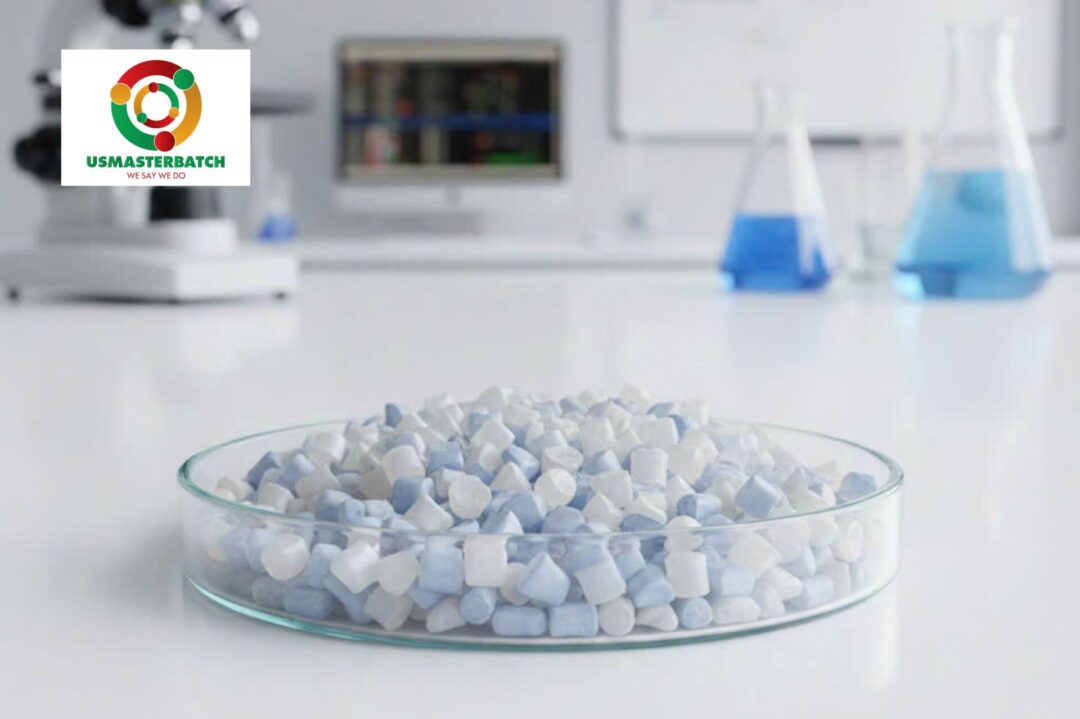
An antimicrobial additive is a functional additive incorporated into plastic materials to inhibit, eliminate, or reduce the growth of microorganisms such as bacteria, mold, and odor-causing microbes. These additives are typically integrated during the production of masterbatch or compound to ensure excellent dispersion, stable performance, and long-lasting effectiveness.
Common types include:
- Silver ions (Ag⁺) – durable, highly effective antibacterial technology with a safe, non-toxic profile
- Zinc pyrithione (ZPT) – highly effective against mold and both gram-positive and gram-negative bacteria
- Triclosan – used in certain specialized applications (but restricted in many industries)
- Organic antimicrobials – environmentally friendly options suitable for stringent safety requirements
2. How Do Antimicrobial Additives Work?
Depending on the type of additive, the mechanisms may vary, but they typically follow three main principles:
(1) Disrupting the bacterial cell structure
Metal ions such as silver or zinc bind to cellular proteins, disrupting metabolic processes and causing cell death.
(2) Inhibiting microbial replication
Some additives block DNA or RNA synthesis, preventing microorganisms from multiplying and spreading on the plastic surface.
(3) Preventing odor and mold formation
Antimicrobial additives not only combat harmful bacteria, but also inhibit odor-causing microbes and mold – common factors that degrade the appearance and quality of plastic products.
With these mechanisms, antimicrobial additives can maintain long-lasting protection, are generally unaffected by normal environmental conditions, and are not easily washed off like surface coatings.
3. Benefits of Using Antimicrobial Additives in Plastics
Incorporating antimicrobial additives into plastic manufacturing provides several key advantages:
✔ Reduce bacterial contamination
Antimicrobial additives can reduce bacterial presence on the plastic surface by up to 99%, enhancing product safety.
✔ Improve product durability and quality
Mold and bacteria can cause discoloration, degradation, and reduction in mechanical properties. Antimicrobial additives extend product lifespan by preventing these issues.
✔ Eliminate unpleasant odors
Odor-causing bacteria often appear in humid environments or when the product is handled frequently. Antimicrobial additives help keep surfaces clean and odor-free.
✔ Increase product competitiveness
Plastic products with built-in antimicrobial protection offer a significant advantage in high-demand markets, such as food, healthcare, and consumer goods.
✔ Ensure processing stability
Antimicrobial additives are engineered to withstand high processing temperatures in injection molding, extrusion, film blowing, or fiber spinning without losing effectiveness.
4. Applications of Antimicrobial Additives in the Plastics Industry

Antimicrobial additives are widely used across multiple industries, including:
- Food packaging: trays, containers, wrapping films
- Medical devices: tubing, medical accessories, device housings
- Household products: cutting boards, storage boxes, toothbrushes, water bottles
- Children’s toys: products requiring high hygiene standards
- Skin-contact items: door handles, sports equipment grips, fitness accessories
- Industrial products: electronic components, machine parts used in humid environments
These additives are suitable for various polymers, such as PP, PE, PET, PVC, ABS, HIPS, and TPE.
5. Why Should Manufacturers Choose Antimicrobial Additives from US Masterbatch?
US Masterbatch provides a range of Antimicrobial Additive Masterbatch solutions optimized for different applications:
- Up to 99% antimicrobial efficiency based on international testing standards
- Excellent dispersion, with no negative impact on transparency or mechanical properties
- Compatibility with multiple resin systems
- Safe, non-toxic, and environmentally friendly formulations
- Customizable recipes based on customer requirements: active ingredient concentration, resin compatibility, and processing conditions.
We support manufacturers throughout the entire process – from R&D formulation to sample evaluation and quality verification – ensuring optimal product performance.