Key Components of PVC Formulations
Polyvinyl Chloride (PVC) is one of the most unique polymers in the plastics industry. Unlike polyethylene (PE) or polypropylene (PP), which can be processed and used almost directly after polymerization, virgin PVC resin is thermally unstable, difficult to process, and has very limited practical value on its own. That is why every PVC product on the market — from water pipes, electrical cables, window profiles, PVC sheets, to household products — is manufactured based on a PVC formulation or PVC compound. A deep understanding of components in PVC formulations and their interaction mechanisms is the foundation for producing PVC materials that are stable, durable, cost-effective, and application-specific.
PVC Formulation – A Complex Multi-Component Material System
A PVC formulation is not a fixed recipe, but a carefully balanced multi-component system where each ingredient plays a specific role while interacting closely with others.
PVC formulations includes:
- PVC resin
- Heat stabilizers
- Plasticizers (for flexible PVC)
- Fillers
- Lubricants
- Impact modifiers & processing aids
- Pigments and functional additives
👉 The difference between an average PVC compound and a high-performance PVC compound lies in understanding the function and interaction of each component — not just the mixing ratio.
1. PVC Resin – One of The Important Components of PVC Formulations
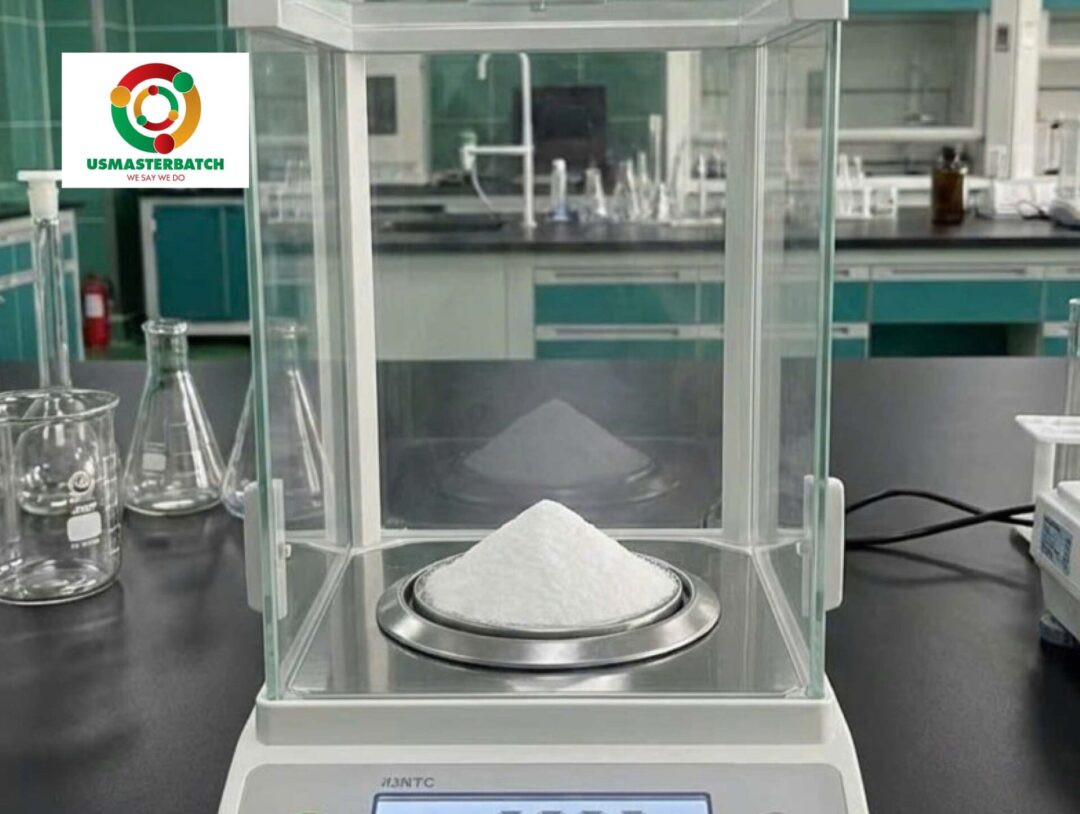
Chemical Nature of PVC Resin in PVC Formulations
PVC is a polymer of vinyl chloride, characterized by the presence of chlorine atoms along the polymer chain. This structure provides:
- Naturally high rigidity
- High polarity
- Excellent chemical resistance
However, the C–Cl bond is thermally weak, making PVC highly susceptible to thermal degradation during processing.
Types of PVC Resin and Their Impact on PVC Formulations
Suspension PVC (S-PVC)
- Porous particles with medium size
- Excellent plasticizer absorption
- Easy dispersion of additives
👉 The most widely used PVC resin for pipes, profiles, cables, and general PVC compounds.
Emulsion / Paste PVC (E-PVC)
- Extremely fine particle size
- Large surface area
- Produces smooth and uniform surfaces
👉 Mainly used in synthetic leather, coatings, flooring, and plastisol applications, but requires strict processing control.
K-Value – A Critical Parameter in PVC Resin Selection
The K-value reflects polymer chain length and molecular weight:
- Low K-value (K57–K60):
- Easy processing
- Lower mechanical strength
- Suitable for flexible PVC
- Easy processing
- Medium K-value (K65–K67):
- Balanced properties
- Broad application range
- Balanced properties
- High K-value (K70+):
- High mechanical strength
- More difficult processing
- Used for pipes and rigid profiles
- High mechanical strength
👉 Incorrect K-value selection can lead to production failure even with a correct formulation.
2. Heat Stabilizers – Protecting PVC from Thermal Degradation
Thermal Degradation Mechanism of PVC
When PVC is heated:
- C–Cl bonds break
- Hydrogen chloride (HCl) is released
- Released HCl accelerates further degradation
This is an autocatalytic degradation process.
👉 Without stabilizers, PVC will:
- Discolor from white → yellow → brown → black
- Lose mechanical properties rapidly
How Heat Stabilizers Work
Heat stabilizers act through multiple mechanisms simultaneously:
- Neutralizing or scavenging released HCl
- Replacing unstable chlorine atoms
- Interrupting degradation chain reactions
Common Stabilizer Systems
Calcium-Zinc (Ca-Zn) Stabilizers
- HCl neutralization and chain stabilization
- Non-toxic and environmentally friendly
- Widely used in modern PVC applications
Lead-Based Stabilizers
- Excellent long-term thermal stability
- Highly effective in rigid PVC
- Increasingly restricted due to environmental regulations
Tin Stabilizers
- Highest thermal stability efficiency
- Excellent transparency retention
- Higher cost
👉 Heat stabilizers directly determine processing stability and product lifespan.
3. Plasticizers – The Softening Mechanism in PVC Formulations
Plasticizers are essential for flexible and semi-rigid PVC, strongly influencing:
- Flexibility
- Elasticity
- Overall cost structure
Plasticization Mechanism
Plasticizers penetrate between PVC chains, resulting in:
- Reduced intermolecular forces
- Increased polymer chain mobility
- Lower glass transition temperature (Tg)
👉 PVC transforms from rigid and brittle to soft and flexible.
Common Plasticizer Types in PVC Formulations
- DOP, DOTP: balanced cost and performance
- DINP, DIDP: improved thermal durability
- Non-phthalate plasticizers: safer, lower migration
Impact of Plasticizers on PVC Systems
- Higher plasticizer content increases softness but reduces strength
- Plasticizer migration affects long-term durability
- Plasticizers represent the largest cost portion in flexible PVC compounds
4. Fillers in PVC Formulations – Cost Optimization and Mechanical Stability
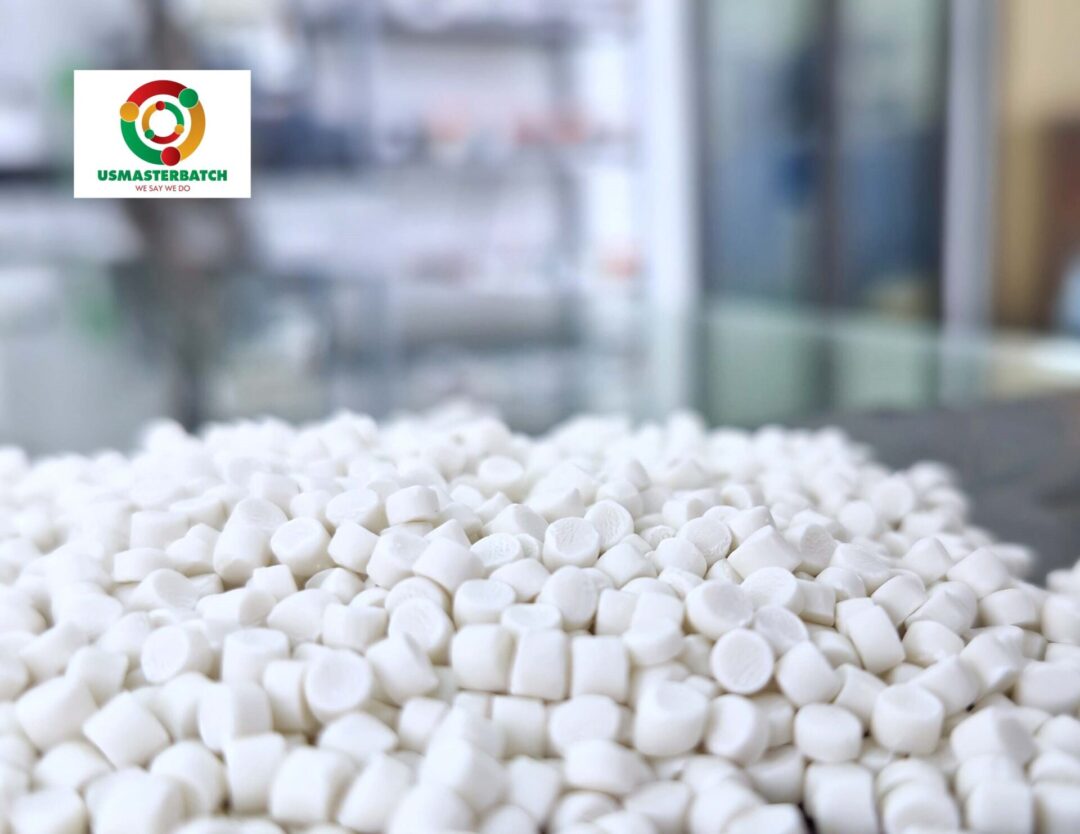
The Real Role of Fillers in PVC Formulations
Fillers are not just cost reducers. In PVC, they also:
- Increase stiffness
- Reduce shrinkage
- Improve dimensional stability
Calcium Carbonate (CaCO₃)
- Most widely used filler
- Available in coated and uncoated grades
- Particle size and surface treatment determine compound quality
Mechanism of Action
- CaCO₃ particles disperse within the PVC matrix
- Form a mechanical support network
- Influence surface quality and impact strength
👉 Poor-quality fillers can destroy an otherwise well-designed formulation.
5. Lubricants – Controlling Friction and Melt Flow in PVC Formulations
Lubrication Mechanism
Lubricants reduce friction:
- Between polymer chains (internal lubricants)
- Between PVC melt and metal surfaces (external lubricants)
Consequences of Incorrect Lubricant Balance
- Insufficient lubrication: poor gelation, equipment burning
- Excess lubrication: poor surface finish, reduced strength
👉 Small dosage, huge impact on processing performance.
6. Impact Modifiers – Improving Toughness in Rigid PVC Formulations
Impact Modification Mechanism
Impact modifiers create micro-elastic phases inside the PVC matrix to:
- Absorb impact energy
- Prevent crack propagation
👉 Essential for PVC pipes, window profiles, and outdoor applications.
7. Processing Aids – Controlling Gelation Behavior
Processing aids help:
- Accelerate and homogenize PVC gelation
- Improve additive dispersion
- Enhance surface smoothness
8. Pigments & Functional Additives
- Pigments: color control
- UV stabilizers: outdoor weather resistance
- Flame retardants: fire safety
- Application-specific functional additives
The Art of PVC Formulation Design
PVC formulation is a constant balancing act between:
- Mechanical performance and processability
- Performance and cost
- Short-term stability and long-term durability
👉 There is no universal PVC formula suitable for all applications.
PVC Compound – A Practical Solution for Modern Manufacturing
Using PVC compound allows manufacturers to:
- Reduce technical risks
- Ensure consistent quality
- Save time and operational costs
US Masterbatch – Your PVC Compound Partner from Vietnam
US Masterbatch develops PVC compounds based on:
- Deep understanding of PVC formulation mechanisms
- Extensive real-world compounding experience
- Cost optimization tailored to target markets
Key Advantages of US Masterbatch
- Flexible formulations based on application needs
- Strong control over raw material sourcing
- Ideal for export markets and customized solutions
Conclusion
Understanding each component and its interaction mechanism in PVC formulations is the foundation of producing high-quality, stable, and cost-efficient PVC compounds. In modern manufacturing, PVC compound is no longer just a material — it is a technical and economic solution.