
African Countries with The Largest Trade Deficits (2023–2025)
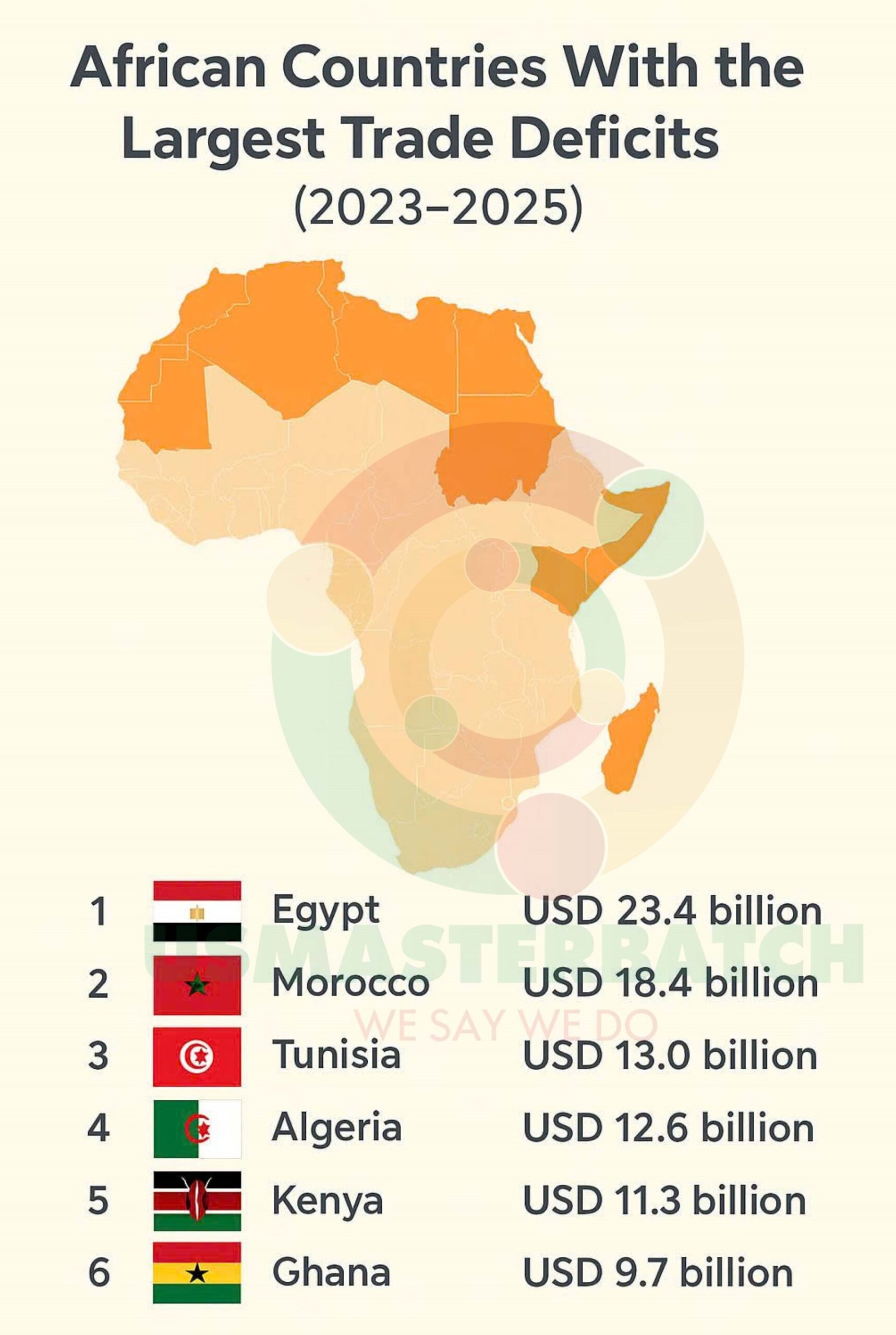
[US Masterbatch] In recent years, Africa has been one of the world’s most dynamic regions in terms of population growth and economic potential. However, many African economies continue to operate with a persistent trade deficit — a situation where the value of imports exceeds that of exports. A trade deficit is not always negative, but in the long term it may create pressure on foreign exchange reserves, increase national debt, and expose economies to external risks. During the period 2023–2025, multiple African countries recorded some of the largest trade deficits globally, mainly due to their high dependence on imported fuel, food, and industrial goods. Below is an overview of the countries with the highest trade deficits and the underlying causes of these imbalances.

1. Egypt
Egypt has consistently been one of the African countries with the largest trade deficit over the last decade. Its deficit comes from several structural factors:
- The country heavily imports petroleum products, machinery, and food, especially wheat.
- Domestic industries remain dependent on imported input materials.
- Tourism — one of Egypt’s main foreign exchange sources — has experienced fluctuating recovery post-pandemic, affecting export revenues.
Despite government efforts to expand industrial zones and strengthen export promotion policies, Egypt’s trade deficit is likely to remain high throughout the 2023–2025 period.
2. Morocco
Morocco ranks among the top economies in North Africa but still maintains a large trade deficit due to:
- Strong reliance on imported energy.
- Increasing demand for industrial inputs as the country expands its automotive and aerospace manufacturing sectors.
- Limited export diversification outside of chemicals, fertilizers, and manufactured goods.
Global price shocks from 2023 to 2025 — especially in oil and gas — have worsened Morocco’s import bill, putting continuous pressure on its trade balance.
3. Tunisia
Tunisia’s trade deficit stems mainly from:
- Limited domestic energy production, leading to high energy import costs.
- Modest industrial performance, with key export sectors such as textiles and machinery not growing fast enough.
- Economic instability and slower foreign investment inflows affecting export capacity.
Although the government has announced measures aimed at improving competitiveness, Tunisia’s trade deficit remains one of the largest relative to GDP in Africa.
4. Algeria
While Algeria is traditionally an energy-exporting country, it still records trade deficits in certain years due to:
- Heavy dependence on oil and gas revenues, meaning any decline in global prices directly impacts export earnings.
- Lack of diversification — most consumer goods and industrial equipment must be imported.
- Growth in domestic consumption increases the volume of imported goods.
From 2023 to 2025, if oil prices fluctuate, Algeria’s trade balance may continue experiencing significant instability.
5. Kenya
Kenya is one of East Africa’s largest and fastest-growing economies, but its trade deficit also ranks among the highest because:
- Kenya imports large quantities of fuel, machinery, iron, and steel.
- The country’s agricultural exports — tea, coffee, flowers — have high value but grow slowly compared to import demands.
- Rapid urbanization increases reliance on imported construction and manufacturing inputs.
Kenya is actively investing in manufacturing, but these initiatives require time to reduce its trade imbalance.
6. Ghana
Ghana’s trade performance has been significantly impacted by:
- Strong dependence on imports of petroleum products, processed foods, and machinery.
- Volatile export earnings from gold and cocoa — two commodities heavily affected by global prices.
- Currency depreciation, which increases the cost of imports.
Although oil production has helped improve foreign exchange revenue, it has not been sufficient to eliminate the trade deficit.
Why Do These Countries Have Large Trade Deficits?
Across Africa, the main causes of trade deficits include:
- Dependence on imported fuel and machinery
- Limited industrial capacity
- Low value-added exports
- Population growth increasing consumption
- Vulnerability to global commodity price fluctuations
Many countries are actively implementing strategies such as industrial promotion, agricultural modernization, and renewable energy development to reduce trade deficits in the coming decade.
Conclusion
During the period 2023–2025, Egypt, Morocco, Tunisia, Algeria, Kenya, and Ghana stand out among African nations with large trade deficits. While each country’s situation involves unique structural factors, the common challenges include limited industrial output, dependency on imported goods, and external economic fluctuations. Understanding these issues provides valuable insight for investors, manufacturers, and businesses seeking opportunities in the African market.