
What is BOPE Film?
1. What is BOPE Film? The Revolution in Flexible Packaging
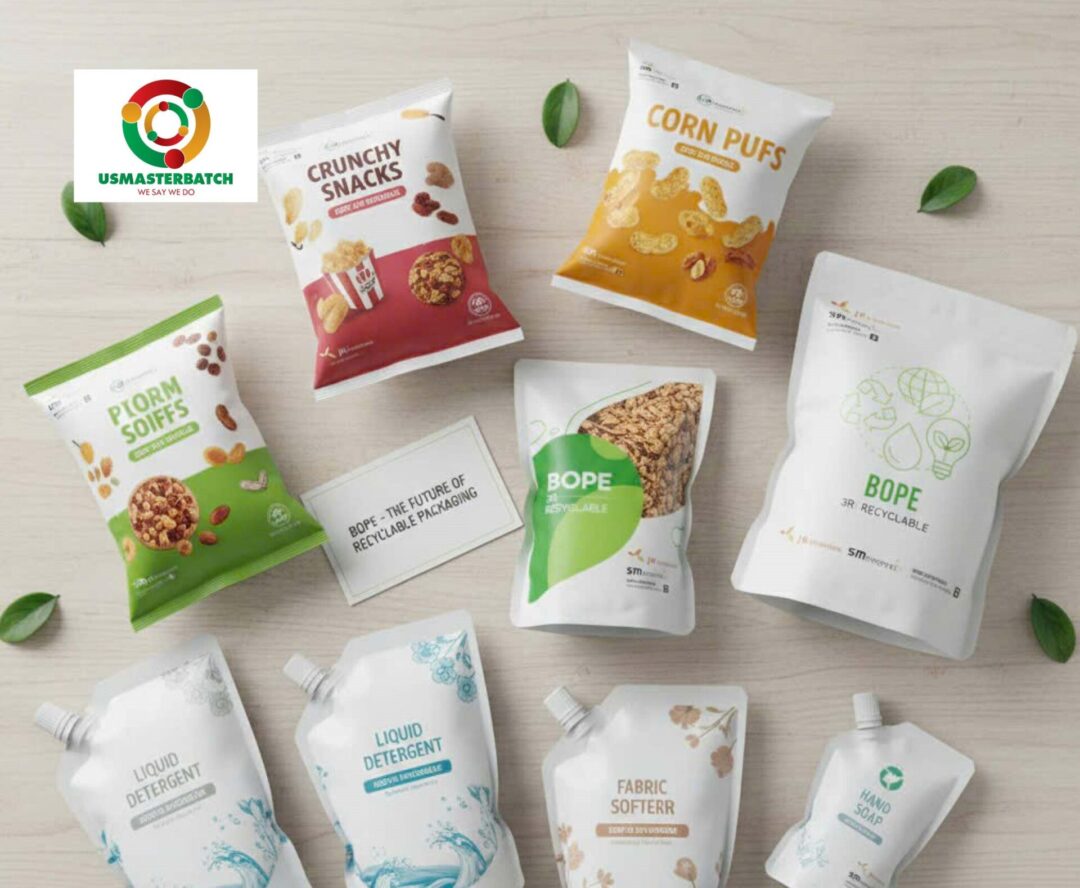
BOPE Film (Biaxially Oriented Polyethylene) represents a significant technological leap in the plastic film industry. It is produced by orienting Polyethylene (PE) resin in two directions: Machine Direction (MD) and Transverse Direction (TD). This specialized process transforms the standard molecular structure of PE into a high-performance material that rivals BOPP (Biaxially Oriented Polypropylene) and BOPA (Biaxially Oriented Polyamide).
In the current global shift toward environmental responsibility, BOPE is the “holy grail” for Circular Packaging. It enables the creation of mono-material structures that are fully recyclable, addressing the critical waste management challenges posed by traditional multi-layer laminated films.
2. Outstanding Technical Characteristics of BOPE
BOPE film offers a unique combination of properties that standard Blown PE films cannot match:
- Enhanced Mechanical Strength: The biaxial stretching process significantly improves tensile strength, impact resistance, and puncture resistance.
- Exceptional Down-gauging: BOPE allows manufacturers to reduce film thickness by up to 50% compared to traditional PE films while maintaining or even improving the load-bearing capacity.
- Optical Clarity: BOPE features high transparency and gloss, providing an premium shelf appearance for consumer goods.
- Barrier Properties: When compared to standard PE, BOPE offers better moisture and oxygen barrier performance, extending the shelf life of the packaged contents.
3. The Role of Filler Masterbatch in BOPE Film Production
Filler Masterbatch (commonly known as Calcium Carbonate CaCO3 masterbatch) has become an indispensable component in the BOPE manufacturing industry. Its application goes beyond simple cost-cutting, offering several functional benefits.
3.1. Economic Efficiency and Raw Material Savings
The volatility of virgin PE resin prices poses a challenge for manufacturers. Filler Masterbatch, containing high-purity CaCO3, provides a cost-effective alternative. By incorporating Filler Masterbatch (typically between 10% and 20%), producers can substantially lower the final product’s cost per kilogram without compromising the core integrity of the film.
3.2. Processing Optimization
- Thermal Efficiency: CaCO3 has higher thermal conductivity than pure polyethylene. This allows the film to heat up more uniformly during the stretching phase and cool down faster at the end of the line, enabling higher production speeds and reduced energy consumption.
- Improved Stiffness: The mineral reinforcement from the filler increases the film’s modulus (stiffness). This is particularly beneficial for high-speed automated packaging lines where film “limpness” can cause jams.
3.3. Surface Modification and Printability
The inclusion of ultrafine filler particles creates a micro-textured surface. This acts as a natural Anti-block agent, reducing the coefficient of friction (COF) and preventing film layers from sticking. Furthermore, this texture can improve ink anchoring, resulting in more durable and vibrant printing quality.
4. Critical Quality Standards for BOPE Film Filler Masterbatch
Producing BOPE is a delicate process. The film is stretched to several times its original size, meaning any impurity can lead to a “web break”.
- Particle Size Distribution: Only ultrafine CaCO3 (with D50 usually below 1.5 microns) should be used. Particles must be small enough to stay embedded within the film matrix during the thinning process.
- Superior Dispersion: Advanced twin-screw extrusion technology is required to ensure that the filler is perfectly dispersed within the carrier resin. Agglomerates are the primary cause of film breakage in BOPE lines.
- Low Volatile Content: Moisture and volatiles must be kept to an absolute minimum to prevent surface defects such as “fish-eyes” or silver streaks.
5. Conclusion

The synergy between BOPE film and high-quality Filler Masterbatch is setting a new benchmark for the flexible packaging industry. By combining the superior mechanical and optical properties of BOPE with the functional and economic advantages of advanced Calcium Carbonate Filler Masterbatch, manufacturers can achieve an optimal balance between performance, sustainability, and cost efficiency.
This integrated solution not only supports down-gauging and material reduction, but also enables the development of mono-material, fully recyclable packaging structures that align with global circular economy initiatives. At the same time, improved processing stability, higher production efficiency, and enhanced printability provide tangible operational benefits for converters and brand owners alike.
As environmental regulations tighten and consumer awareness continues to grow, brands are increasingly seeking packaging solutions that deliver both technical excellence and sustainability. In this context, BOPE-Filler technology is no longer a future concept but a practical, scalable, and commercially viable solution. Its adoption is expected to accelerate, positioning it as a cornerstone of modern plastic manufacturing and a key driver of innovation in next-generation flexible packaging.