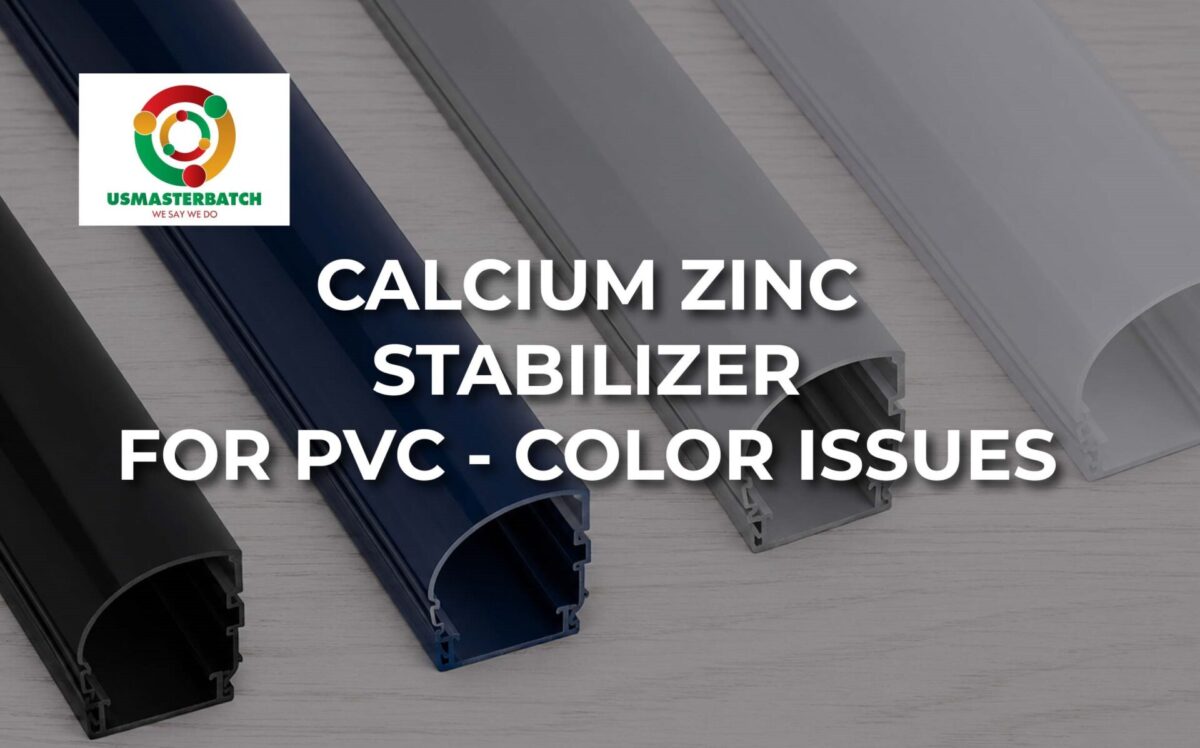
CALCIUM ZINC STABILIZER FOR PVC: COLOR ISSUES
Calcium Zinc stabilizer for PVC has become increasingly common as manufacturers transition from traditional lead-based stabilizers. This shift is largely driven by the need to comply with RoHS, REACH, and NSF requirements in demanding markets such as the United States, Europe, and Australia.
In this article, US Masterbatch explores the most common color-related challenges associated with the transition to Ca/Zn stabilizer systems. However, many manufacturers encounter various challenges when converting from traditional lead stabilizers to environmentally friendly Ca/Zn systems. After rigid PVC products are converted from lead salt stabilizers to calcium/zinc stabilizers, color-related issues become one of the most common and complex challenges to address. These issues typically include:
-
Product Color Changes with Calcium Zinc Stabilizer for PVC
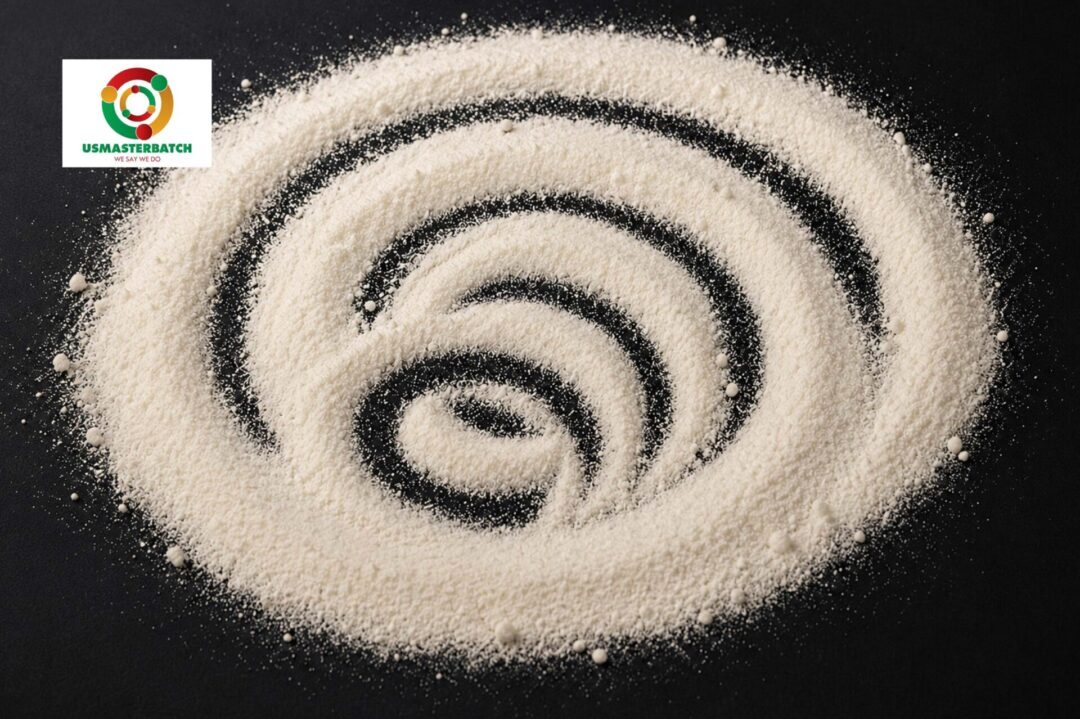
(Illustrative purpose only)
After replacing lead-based stabilizers with Calcium Zinc stabilizer for PVC systems, manufacturers often observe noticeable changes in product color. The finished product tends to exhibit a bluish tint, making it more difficult to achieve warmer or reddish color shades.
-
Color Inconsistency
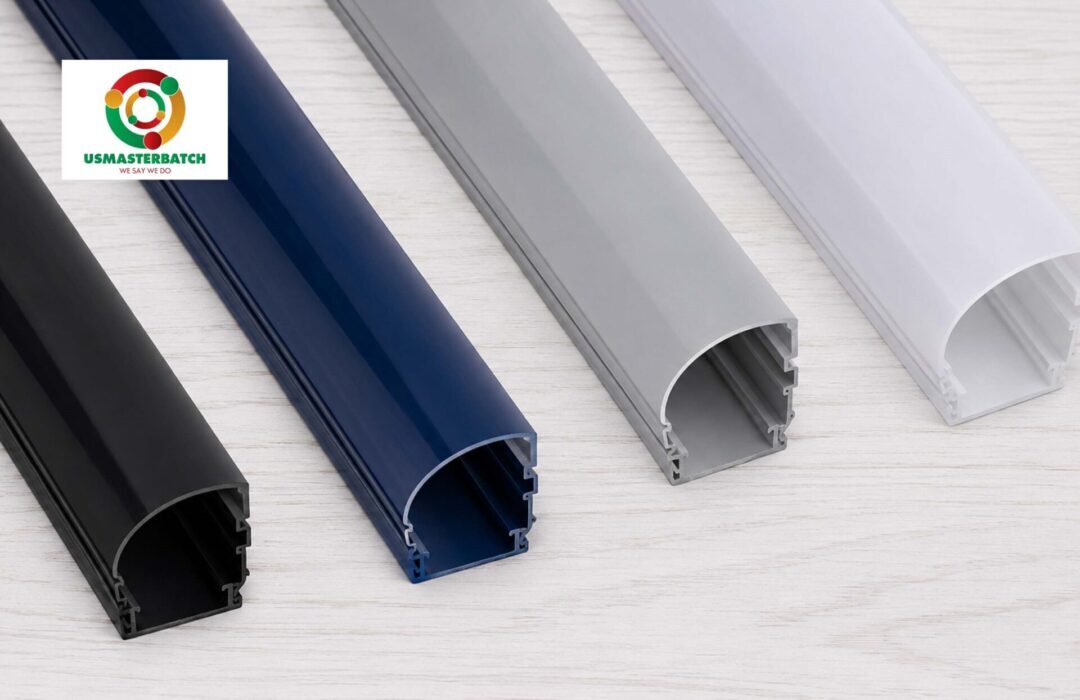
(Illustrative purpose only)
Color inconsistency between the interior and exterior surfaces of the product may occur when using Calcium Zinc stabilizer for PVC formulations.
Typically, the outer surface appears relatively brighter and more neutral, while the inner section tends to develop bluish or yellowish hues. This phenomenon is particularly common in PVC profiles and pipes.
-
Zinc Burning Phenomenon in Calcium Zinc Stabilizer for PVC Systems
Sudden Blackening
This is considered the most critical issue associated with Ca/Zn stabilizer systems.
If the processing temperature becomes excessively high or the material residence time is prolonged, zinc chloride (ZnCl₂) may form. Acting as a strong Lewis acid catalyst, ZnCl₂ accelerates PVC chain degradation dramatically, resulting in rapid blackening and thermal burning of the product.
Yellow Streaks and Black Lines
Compared with lead stabilizers, Ca/Zn systems generally possess a narrower processing temperature window. As a result, unwanted yellow streaks, dark lines, or discoloration along the extrusion direction can easily appear.
Many pipe and pipe fitting manufacturers have reported that pressure fluctuations not only affect product color but can also influence product performance. Such sensitivity is significantly higher than that observed with lead-based stabilizers.
- Root Causes
Thermal Sensitivity
Compared with lead stabilizers, Calcium Zinc stabilizer for PVC systems generally have a narrower thermal stability window. Once processing temperatures in extrusion or injection molding exceed critical limits, zinc-induced degradation reactions can rapidly become uncontrollable.
Acid Scavenging Capability
Lead stabilizers act as highly effective long-term HCl scavengers. In contrast, zinc-containing stabilizers generate acidic species more rapidly and therefore require additional co-stabilizers to maintain long-term thermal stability.
Quick Stability Comparison
| Property | Lead-Based Stabilizers (Pb) | Calcium/Zinc Stabilizers (Ca/Zn) |
| Initial Color Retention | Excellent | Requires additional optimization with supporting additives |
| Long-Term Thermal Stability | Excellent and highly stable | Lower stability, susceptible to sudden blackening |
| Final Product Appearance | Bright and stable white color | More prone to slight yellowing or haze |
-
Color Changes Caused by Impurities
Reaction with Iron Ions
If calcium carbonate fillers contain elevated levels of iron ions, interactions with Ca/Zn stabilizers may occur, causing the finished product to develop a reddish discoloration.
Sulfur Resistance
One notable advantage of Ca/Zn stabilizers is their resistance to sulfur staining. Unlike lead-based systems, which can blacken upon exposure to sulfur-containing compounds, Ca/Zn systems maintain their appearance under similar conditions.
-
Color Variations Between Production Batches
Color Drift
During continuous production using Calcium Zinc stabilizer for PVC, color variations may occur between different production lines or at different operating periods on the same machine. The degree of variation is typically greater than that experienced with lead-based stabilizers.
Approaches to Solving Color Issues in Ca/Zn Systems
To effectively address color-related challenges when transitioning to Ca/Zn stabilizers, manufacturers may need to re-optimize the entire additive package to ensure maximum compatibility within the formulation.
Potential solutions include:
- Optimizing lubricant combinations to reduce friction and processing heat generation.
- Incorporating co-stabilizers such as ESBO (Epoxidized Soybean Oil) or β-diketones to suppress zinc burning and prevent sudden blackening.
- Fine-tuning processing temperatures to maximize the thermal stability window of the Ca/Zn system.
US MASTERBATCH Solutions
At US Masterbatch, we have successfully developed effective solutions to prevent, inhibit, and control the formation of zinc chloride, thereby significantly expanding the thermal processing window of Ca/Zn stabilizer systems.
These technologies help ensure consistent product quality across production batches while improving processing reliability and long-term stability.
We offer a comprehensive portfolio of customized Ca/Zn heat stabilizer packages specifically engineered for a wide range of PVC applications. Our solutions are designed to provide optimal thermal stability performance and meet the diverse requirements of both products and customers.
Contact us today to discover the most suitable Ca/Zn stabilizer solution for your application.