Carbon Fiber Electrical Conductivity
[US Masterbatch] Carbon fiber has become one of the most important advanced materials in modern engineering due to its exceptional combination of high strength, low weight, corrosion resistance, and electrical conductivity. While carbon fiber is widely known for its mechanical performance in aerospace and automotive industries, Carbon Fiber electrical conductivity is equally valuable for many industrial applications.
Unlike traditional polymer materials, which are typically electrical insulators, carbon fiber can conduct electricity due to its unique internal structure composed primarily of graphitic carbon atoms. This characteristic allows carbon fiber to be used in applications such as electromagnetic shielding, lightning protection, sensors, and conductive composites.
Understanding the electrical conductivity of carbon fiber is essential for engineers, manufacturers, and materials scientists who want to optimize composite performance or develop new conductive materials. This article explores the structure, conductivity mechanisms, influencing factors, and applications of carbon fiber electrical conductivity.
1. What is Carbon Fiber?
Carbon fiber is a high-performance material composed of thin fibers primarily made of carbon atoms. These fibers are typically about 5–10 micrometers in diameter, and they are produced through the carbonization of precursor materials such as:
- Polyacrylonitrile (PAN)
- Pitch
- Rayon
During manufacturing, these precursor fibers are heated to extremely high temperatures (up to 3000°C) in a controlled environment. This process removes non-carbon atoms and aligns the remaining carbon atoms into graphite-like crystalline structures.
The result is a fiber with:
- Very high tensile strength
- High stiffness
- Excellent fatigue resistance
- Low density
- Good electrical conductivity
These properties make carbon fiber a key material in industries such as aerospace, automotive, marine, energy, and electronics.
2. Electrical Conductivity of Carbon Fiber
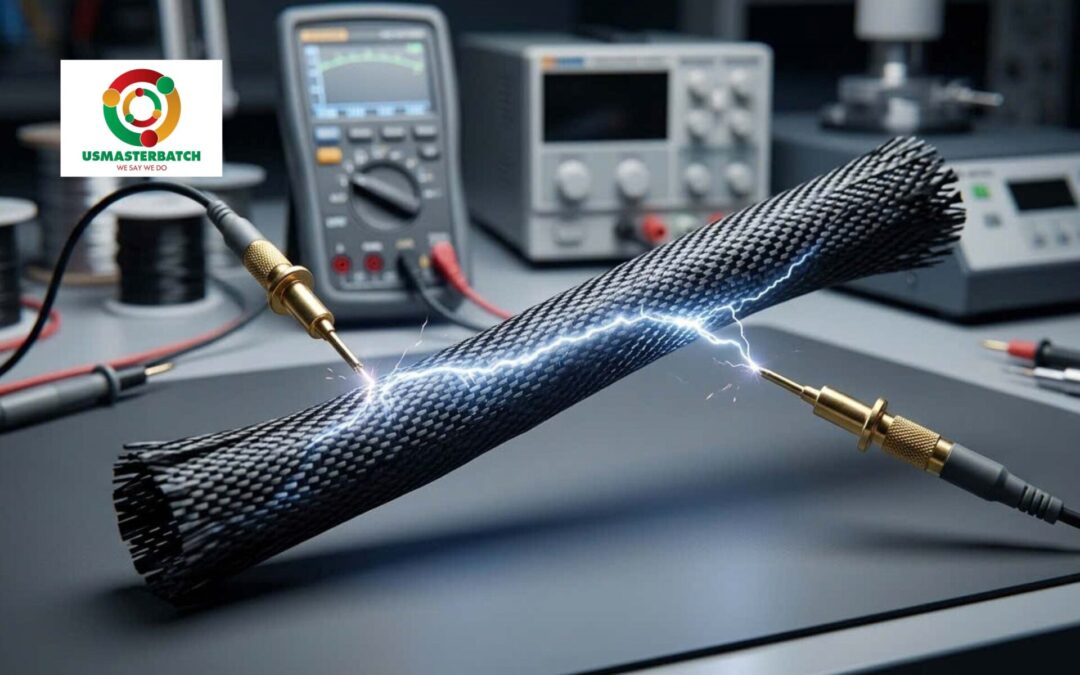
(Illustrative purposes only)
Electrical conductivity refers to a material’s ability to allow the flow of electric current. Carbon fiber exhibits moderate electrical conductivity due to the graphitic structure of carbon atoms within the fiber.
In graphite structures, carbon atoms form hexagonal lattices, where electrons can move relatively freely along the planes. This electron mobility enables carbon fiber to conduct electricity.
Typical electrical conductivity values for carbon fiber range from:
10³ to 10⁴ S/m (Siemens per meter)
This is significantly lower than metals such as copper but far higher than typical polymers.
Comparison of conductivity:
| Material | Electrical Conductivity |
|---|---|
| Copper | ~5.8 × 10⁷ S/m |
| Aluminum | ~3.5 × 10⁷ S/m |
| Carbon Fiber | 10³ – 10⁴ S/m |
| Plastics | ~10⁻¹⁴ S/m |
Although carbon fiber is not as conductive as metals, it offers the advantage of combining conductivity with lightweight structural performance.
3. Anisotropic Conductivity
One important characteristic of carbon fiber conductivity is anisotropy.
Anisotropic materials exhibit different properties depending on the direction of measurement.
For carbon fiber:
- Along the fiber axis: High electrical conductivity
- Across the fiber (transverse direction): Much lower conductivity
This happens because the carbon atoms are highly aligned along the fiber length, allowing electrons to travel more easily in that direction.
In carbon fiber reinforced polymers (CFRP), conductivity depends heavily on fiber orientation and distribution.
4. Factors Affecting Carbon Fiber Electrical Conductivity
Several factors influence the electrical conductivity of carbon fiber.
4.1 Fiber Structure and Graphitization
Higher graphitization levels improve conductivity because more ordered graphite layers allow electrons to move more freely.
High-modulus carbon fibers typically have:
- Higher graphitization
- Better electrical conductivity
4.2 Fiber Type
Different precursor materials produce carbon fibers with different properties.
PAN-based carbon fibers are the most common and provide a good balance of mechanical and electrical properties.
Pitch-based fibers often have higher conductivity because they form more graphitic structures.
4.3 Fiber Orientation
In composite materials, conductivity depends on how fibers are arranged:
- Unidirectional composites: High conductivity along fiber direction
- Random orientation: More uniform but lower conductivity
4.4 Fiber Volume Fraction
Increasing the amount of carbon fiber within a composite increases electrical conductivity.
When carbon fiber content reaches a certain level (called the percolation threshold), conductive pathways form throughout the material.
4.5 Matrix Material
Carbon fibers are often embedded in polymer matrices such as:
- Epoxy
- Polyester
- Nylon
- Polypropylene
These polymers are typically insulators, so overall conductivity depends on how well fibers connect within the matrix.
5. Conductive Carbon Fiber Composites
Carbon fiber is rarely used alone; instead, it is typically combined with resins to form carbon fiber reinforced composites.
These composites can achieve:
- Mechanical reinforcement
- Electrical conductivity
- Electromagnetic shielding
- Static dissipation
Engineers can tailor conductivity by adjusting:
- Fiber content
- Fiber orientation
- Conductive additives
In some cases, additional conductive materials are added, such as:
- Carbon nanotubes
- Graphene
- Conductive carbon black
6. Industrial Applications
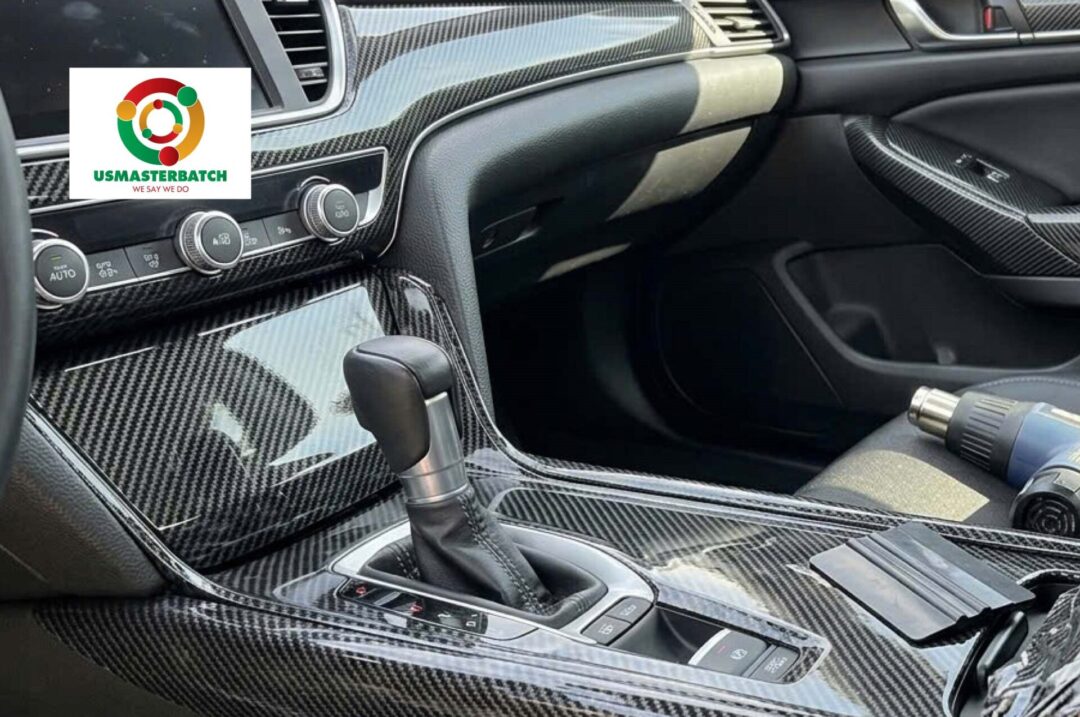
(Illustrative purposes only)
Carbon fiber electrical conductivity enables many advanced applications across industries.
6.1 Lightning Strike Protection
Aircraft structures made from carbon fiber composites require protection from lightning strikes.
Because carbon fiber is conductive, it can help distribute electrical energy across the structure. Additional conductive layers or meshes are often added to enhance protection.
This technology is widely used in modern aircraft structures.
6.2 Electromagnetic Interference (EMI) Shielding
Electronic devices must be protected from electromagnetic interference.
Carbon fiber composites can provide EMI shielding by reflecting or absorbing electromagnetic radiation.
Applications include:
- Electronics housings
- Aerospace components
- Telecommunications equipment
6.3 Antistatic Materials
In industries such as packaging, electronics manufacturing, and chemical processing, static electricity can cause serious problems.
Carbon fiber can be incorporated into polymers to create antistatic materials that safely dissipate electrical charges.
Common uses include:
- Industrial flooring
- Electronic packaging
- Fuel system components
6.4 Sensors and Smart Structures
Carbon fiber conductivity allows it to be used in structural health monitoring systems.
Changes in electrical resistance can indicate:
- Damage
- Cracks
- Stress
This enables engineers to monitor the condition of structures in real time.
Applications include:
- Bridges
- Aircraft structures
- Wind turbine blades
6.5 Heating Elements
Carbon fiber can also be used as a resistive heating element.
When electric current passes through the fiber, it generates heat due to electrical resistance.
Applications include:
- Heated clothing
- Automotive seat heaters
- De-icing systems
- Industrial heating panels
7. Advantages of Carbon Fiber Conductivity
Carbon fiber offers several advantages compared with traditional conductive materials.
Lightweight
Carbon fiber is much lighter than metals, making it ideal for weight-sensitive industries such as aerospace and automotive.
Corrosion Resistance
Unlike metals, carbon fiber does not rust or corrode in harsh environments.
Structural Integration
Carbon fiber can provide both mechanical reinforcement and electrical conductivity in a single material.
Design Flexibility
Engineers can tailor electrical properties by adjusting fiber orientation and composite design.
8. Limitations
Despite its advantages, carbon fiber conductivity also has some limitations.
Lower Conductivity Than Metals
Carbon fiber is conductive but not as efficient as metals like copper or aluminum.
Anisotropic Behavior
Conductivity varies depending on fiber direction, which can complicate design.
Cost
Carbon fiber materials are typically more expensive than traditional materials.
9. Future Developments
Research continues to improve carbon fiber conductivity through advanced technologies.
Emerging innovations include:
- Graphene-enhanced carbon fibers
- Carbon nanotube composites
- Hybrid conductive materials
These technologies aim to create materials that combine:
- Higher conductivity
- Lower weight
- Improved mechanical performance
Such materials could transform industries ranging from energy storage to electric vehicles and aerospace engineering.
Conclusion
Carbon fiber electrical conductivity is a key property that expands the usefulness of this advanced material beyond structural applications. Its unique graphitic structure allows it to conduct electricity while maintaining exceptional mechanical strength and lightweight characteristics.
Although carbon fiber does not match the conductivity of metals, its ability to combine electrical performance with structural reinforcement makes it invaluable in modern engineering.
From lightning strike protection and EMI shielding to smart sensors and conductive composites, carbon fiber continues to play a crucial role in the development of innovative materials and technologies.
As research advances, improvements in carbon fiber conductivity and composite design will further expand its applications, making it an increasingly important material in the future of high-performance engineering.