Calcium Stearate in PVC: Benefits & Applications
[US Masterbatch] Calcium Stearate in PVC is one of the most commonly used additives due to its ability to improve lubrication and support processing stability. PVC manufacturing requires a balance between material performance, processing efficiency, and production cost. During processing, manufacturers often face challenges such as material sticking to equipment, unstable melt flow, poor surface quality, and thermal degradation. Even small processing inconsistencies can lead to higher production costs and reduced product quality.
To overcome these challenges, additives play a critical role in PVC formulations. Although used in relatively small amounts, Calcium Stearate can have a significant impact on manufacturing performance and final product quality.
What is Calcium Stearate?
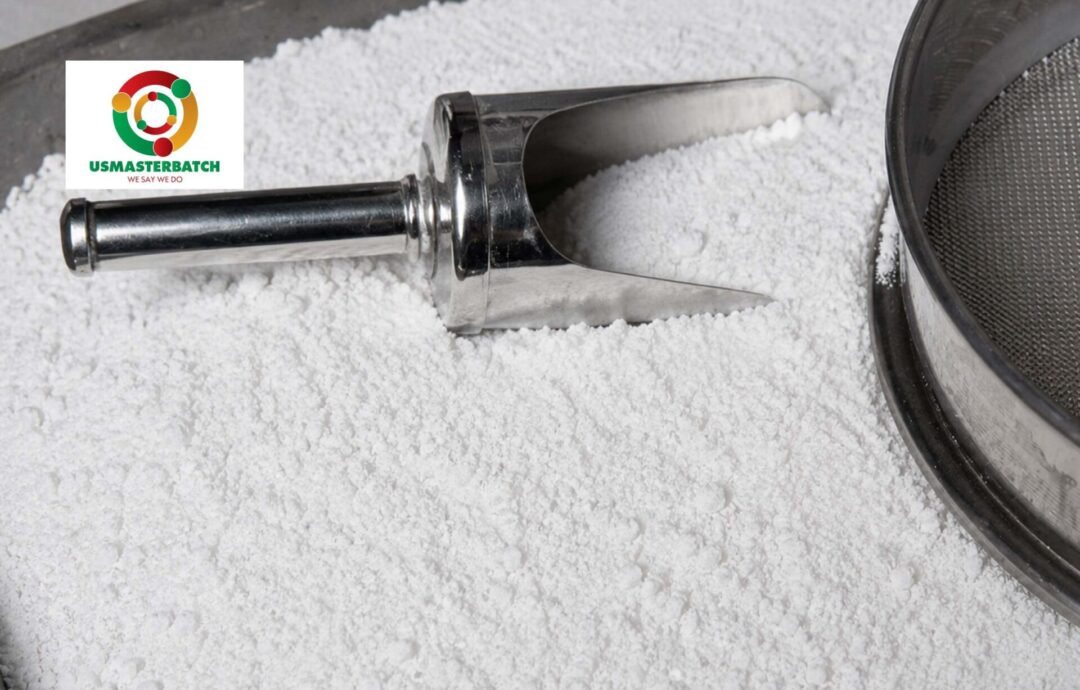
(Illustrative purpose only)
Calcium Stearate is the calcium salt of stearic acid with the chemical formula:
Ca(C18H35O2)2
It appears as a white powder and possesses several characteristics that make it valuable in PVC manufacturing:
- Water-insoluble
- Excellent lubrication properties
- Good thermal stability
- Non-toxic characteristics
- Low moisture absorption
- Good compatibility with polymer systems
Because of these properties, Calcium Stearate is widely used in plastics, rubber, coatings, and especially PVC compounds.
Why is Calcium Stearate Used in PVC?
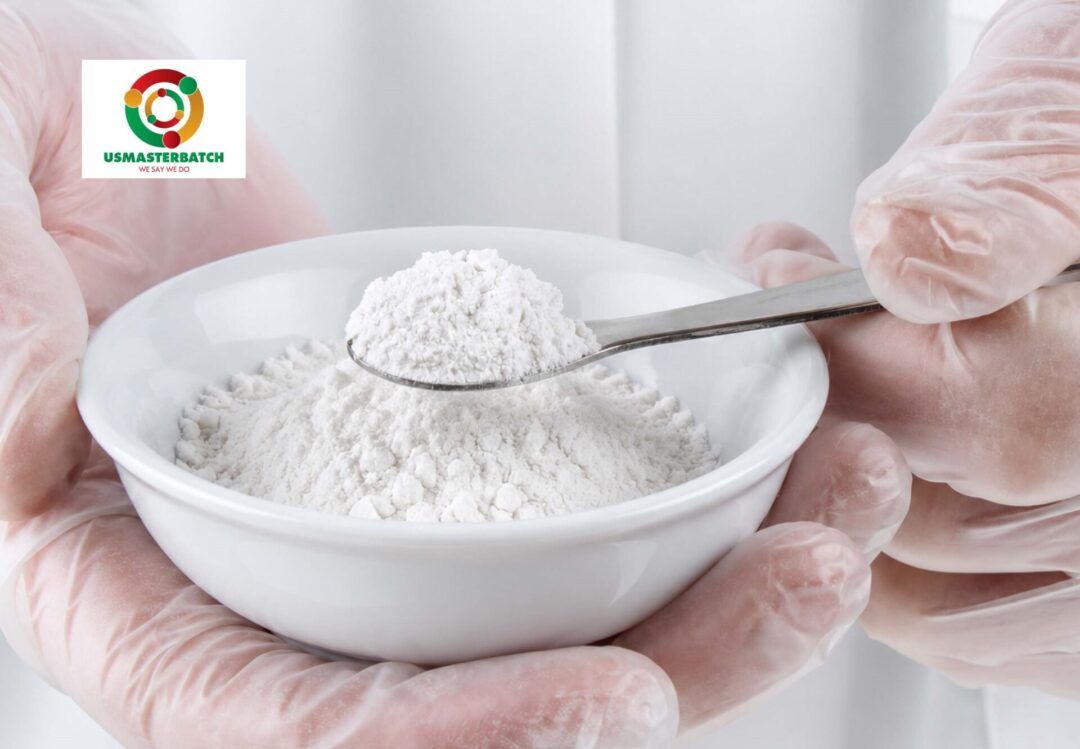
(Illustrative purpose only)
Calcium Stearate performs multiple functions in PVC formulations and contributes to both processing efficiency and product performance.
Internal Lubrication
One of the primary roles of Calcium Stearate in PVC is to act as an internal lubricant.
During PVC processing, polymer chains generate friction when exposed to heat and mechanical force. Excessive friction may create processing difficulties and increase energy consumption.
Calcium Stearate helps:
- Reduce friction between polymer molecules
- Improve melt flow characteristics
- Support smoother processing
- Lower processing resistance
As a result, manufacturers can achieve more stable production conditions.
Improved Processing Efficiency
PVC materials can sometimes stick to processing equipment during extrusion or molding operations.
Calcium Stearate helps minimize these problems by:
- Reducing material adhesion
- Supporting smoother material flow
- Improving machine operation
- Increasing production efficiency
Stable processing conditions often lead to reduced downtime and more consistent output.
Thermal Stabilization Support
PVC naturally releases hydrogen chloride (HCl) when exposed to high temperatures during processing.
Excessive HCl generation may accelerate degradation and negatively affect product quality.
Calcium Stearate can help:
- Absorb released acidic substances
- Support heat stability
- Delay degradation effects
Although Calcium Stearate is not a complete stabilizer by itself, it commonly works together with PVC stabilizer systems to improve overall processing performance.
Better Surface Quality
Product appearance is critical in many PVC applications.
Insufficient lubrication may result in:
- Surface roughness
- Flow marks
- Uneven texture
- Reduced gloss
Calcium Stearate contributes to:
- Smoother surfaces
- Improved product appearance
- Better consistency
- Enhanced finish quality
This becomes especially important for visible applications such as profiles, sheets, and consumer products.
Key Benefits of Calcium Stearate in PVC Compounds
Using Calcium Stearate in PVC formulations can provide several important advantages:
✓ Improved melt flow behavior
✓ Reduced sticking during processing
✓ Enhanced surface quality
✓ Better processing stability
✓ Lower manufacturing costs
✓ Increased productivity
✓ More consistent product quality
✓ Reduced equipment wear
These advantages can contribute directly to production efficiency and long-term operational benefits.
Typical Applications of Calcium Stearate in PVC
Calcium Stearate is widely used in various PVC products and industries.
Pipes and Fittings
In PVC pipe manufacturing, Calcium Stearate helps improve processing behavior and achieve smoother product surfaces.
Benefits include:
- Better extrusion performance
- Stable production conditions
- Improved appearance
Cable Compounds
Cable insulation and sheathing materials require good processing stability.
Calcium Stearate supports:
- Heat resistance during processing
- Consistent material performance
- Improved manufacturing efficiency
Profiles and Window Frames
PVC profiles require high surface quality and dimensional consistency.
Calcium Stearate can help maintain:
- Surface smoothness
- Stable processing conditions
- Uniform appearance
Flooring and PVC Sheets
For flooring and sheet production, maintaining consistent thickness and surface quality is important.
Calcium Stearate contributes to:
- Better flow behavior
- Improved surface finish
- Consistent production quality
Flexible and Medical PVC Products
Flexible PVC applications also use Calcium Stearate to improve manufacturing stability and processing consistency.
Recommended Dosage in PVC Formulations
Typical Calcium Stearate usage levels generally range between:
0.3–1.5 phr (parts per hundred resin)
However, the actual dosage depends on several factors:
- Type of PVC resin
- Processing method
- Stabilizer system
- Product requirements
- Manufacturing conditions
Adding excessive amounts may create undesirable effects such as:
- Delayed fusion
- Reduced mechanical properties
- Processing imbalance
For this reason, formulation optimization remains essential.
Calcium Stearate vs Other PVC Lubricants
Different lubricants provide different functions in PVC processing.
| Additive | Main Function | Main Advantage |
| Calcium Stearate | Internal lubricant | Balanced lubrication and stability |
| Paraffin Wax | External lubricant | Better mold release |
| PE Wax | External lubricant | Improved surface smoothness |
| Stearic Acid | Lubrication | Cost-effective solution |
In practical PVC formulations, manufacturers often combine several additives rather than relying on only one material.
This approach allows them to achieve an optimal balance between lubrication, processing efficiency, and product performance.
How to Choose the Right Calcium Stearate for PVC?
Not all Calcium Stearate products offer the same performance.
Several factors should be evaluated:
- Purity level
- Particle size distribution
- Thermal resistance
- Compatibility with stabilizers
- Manufacturing consistency
- Regulatory compliance requirements
Selecting the right grade can significantly influence final product quality and processing efficiency.
Conclusion
Although Calcium Stearate is added in relatively small quantities, it plays a major role in PVC processing performance. From improving lubrication and reducing equipment sticking to enhancing surface quality and supporting thermal stability, the right additive selection can directly influence manufacturing efficiency and product consistency.
However, achieving the best result is not only about choosing Calcium Stearate itself. The interaction between lubricants, stabilizers, fillers, and processing conditions must also be carefully optimized. An imbalanced formulation can lead to poor fusion behavior, unstable processing, or inconsistent product quality.
At US Masterbatch, we understand that every PVC application has unique requirements. Whether you are manufacturing pipes, profiles, cables, flooring, or flexible PVC products, selecting the right additive combination is essential. Our team develops specialized masterbatch and additive solutions designed to improve processing efficiency, maintain stable product performance, and support manufacturers in achieving consistent production results.
Explore our solutions and discover how optimized PVC formulations can help take your manufacturing performance to the next level.