Microwave-Safe Plastic Wrap: Guidelines & Insights
In the rhythm of modern life, microwave-safe plastic wrap has become an essential solution for safe and efficient food preparation. Alongside it, plastic wrap (cling film) has transformed from a simple kitchen accessory into a sophisticated packaging solution. However, as temperatures rise, so do the stakes for food safety and material integrity. Not all plastic wraps are created equal, and understanding the science behind “microwave-safe” labeling is essential for both end-users and the manufacturers who supply them.
This article explores the technical nuances of microwave-safe films, the role of advanced polymer additives, and how choosing the right materials can define a brand’s success in the global market.
1. US Masterbatch: Your Technical Partner in Polymer Excellence
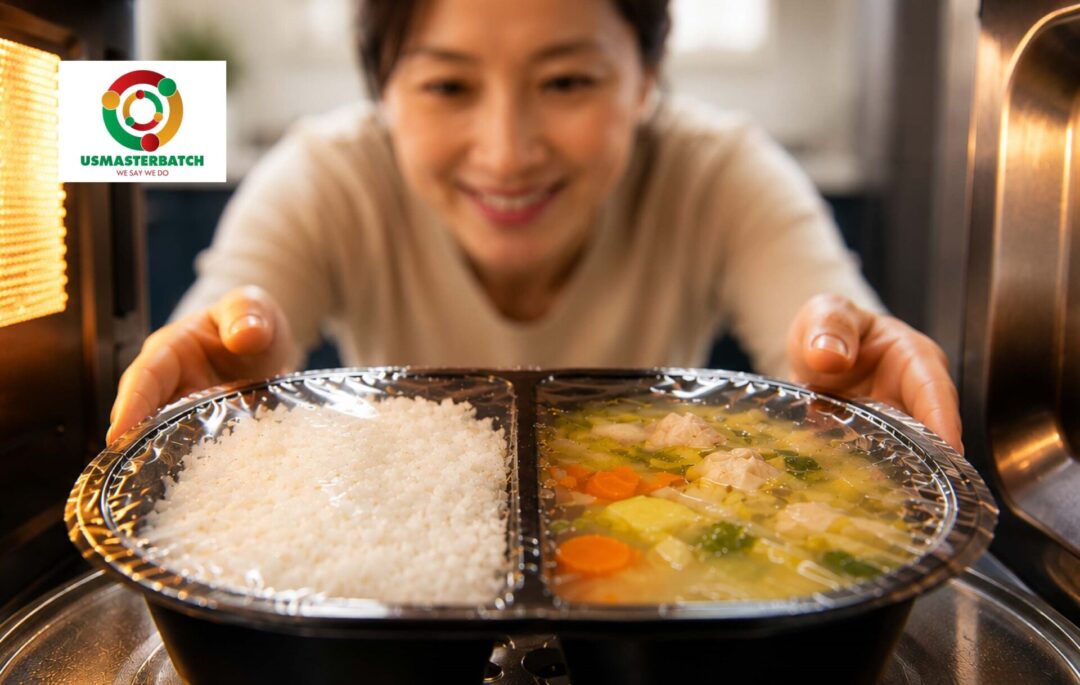
(Illustrative purpose only)
At US Masterbatch, we believe that quality is a science, not a coincidence. With years of experience as a professional technologist in the polymer industry, our team specializes in providing high-performance solutions — including color masterbatches, filler masterbatches, and essential additives — that empower manufacturers to create safer, more durable products.
We don’t just sell raw materials; we provide the expertise needed to navigate the complexities of food-grade plastics. Whether it is ensuring the thermal stability of a thin film or preventing the migration of harmful substances at high temperatures, US Masterbatch is here to help you understand the “why” and “how” behind every product. We bridge the gap between raw polymer potential and the high standards of safety required by today’s consumers.
2. The Competitive Advantage for Manufacturers
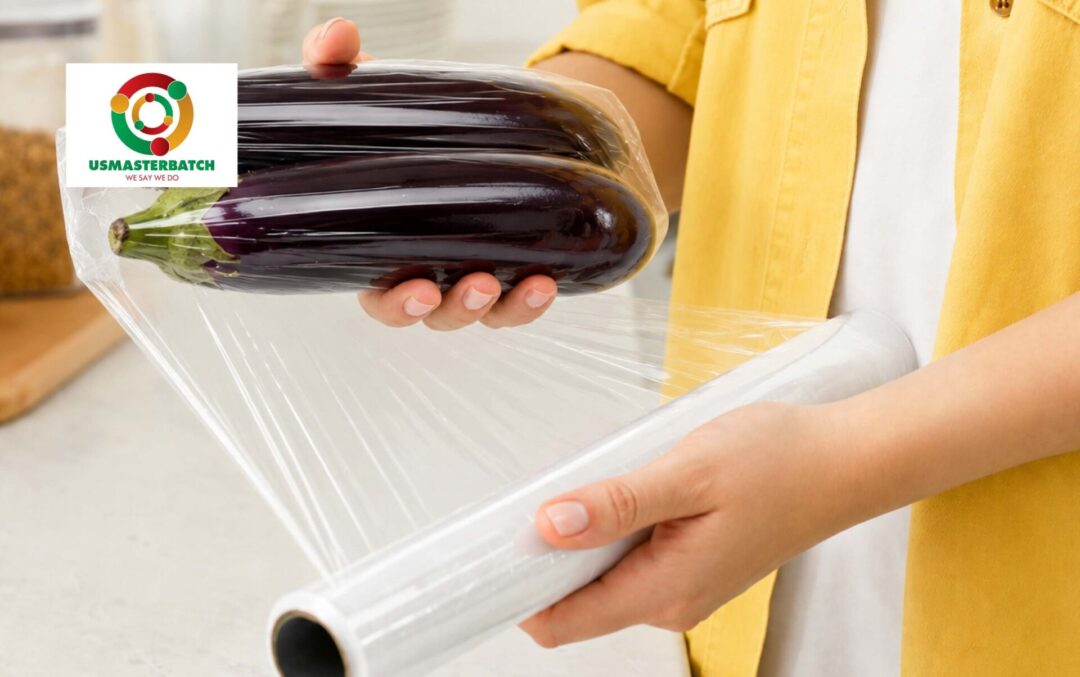
(Illustrative purpose only)
For manufacturers in the plastic industry, developing a high-quality “Microwave-Safe” product line is more than a technical challenge — it is a significant market opportunity.
- Compliance with Global Standards: By focusing on heat-resistant formulations, manufacturers can easily meet stringent regulations such as the EU 2025/40 or FDA standards, opening doors to lucrative markets in North America and Europe.
- Brand Authority: In a market saturated with low-grade plastics, offering a certified microwave-safe wrap establishes your brand as a reliable, safety-conscious leader.
- Product Differentiation: Utilizing specialized additives — like antioxidants and heat stabilizers — allows for the production of thinner, stronger, and more transparent films that outperform the competition without sacrificing safety.
3.The Science Behind Microwave-Safe Plastic Wrap: PE vs. PVC
Understanding the difference between the two primary materials used in plastic wrap is the first step in ensuring safety.
- Polyethylene (PE) – The Safer Standard
Most microwave-safe wraps are made from LDPE (Low-Density Polyethylene) or LLDPE (Linear Low-Density Polyethylene). PE is naturally flexible and typically does not require added plasticizers. Its melting point is generally around 110°C, making it the preferred choice for reheating food.
- Polyvinyl Chloride (PVC) – Use with Caution
PVC is inherently rigid and requires the addition of plasticizers (such as DEHA or Phthalates) to make it clingy and soft. While excellent for cold storage due to its clarity and “stretch”, PVC has a lower threshold for chemical migration when heated. At US Masterbatch, we often guide manufacturers toward PE-based solutions for microwave applications to minimize health risks.
4. Critical Guidelines for Using Microwave-Safe Plastic Wrap
Using plastic wrap in a microwave requires more than just a “safe” label. Proper technique is vital to prevent polymer degradation and food contamination.
A. The “One-Inch” Rule (Avoid Contact)
Even if a wrap is labeled microwave-safe, it should never touch the food directly, especially foods high in fat or sugar. These substances can reach temperatures far exceeding the melting point of the plastic.
- The Pro-Tip: Use a deep container and stretched the wrap over the top, ensuring at least a 2.5 cm (1 inch) gap between the film and the food.
B. Venting is Mandatory
As food heats, it releases steam. If a container is sealed airtight with plastic wrap, the steam pressure can cause the film to burst or, worse, create a “steam vacuum” that could burn the user upon opening.
- The Solution: Always leave a small corner unsealed or pierce the film in several places to allow controlled steam release.
C. Watch the Fat and Sugar Content
Fats and sugars are “microwave-active” ingredients. They heat up much faster than water-based foods. Even the highest quality microwave-safe wrap can melt if it comes into contact with bubbling oil or molten sugar.
5. Additives and Thermal Stability in Microwave-Safe Plastic Wrap
What truly makes a plastic wrap “microwave-safe”? It is often the chemistry happening at the molecular level. At US Masterbatch, we specialize in the additives that make these performance levels possible:
- Antioxidants (AO): During the extrusion of thin films and subsequent heating in a microwave, polymers are susceptible to oxidative degradation. High-quality antioxidants (like UAO 01) prevent the plastic from becoming brittle or yellowing.
- Heat Stabilizers: These additives ensure the long-chain molecules of the polymer remain intact under thermal stress, maintaining the film’s structural integrity so it doesn’t “shrink” or fail when exposed to waves.
- Anti-Fogging Agents: For better consumer experience, these allow steam to form a continuous transparent layer rather than droplets, letting the user see the food clearly as it heats.
By precisely dosing these components into a Filler Masterbatch or a functional carrier, manufacturers can produce a film that is both cost-effective and technically superior.
6. Conclusion: A Future Built on Safety and Innovation
Microwave-safe plastic wrap is a testament to how far polymer science has come. For the consumer, it offers unparalleled convenience. For the manufacturer, it represents a high-value product segment that demands technical precision and a commitment to safety.
At US Masterbatch, we are more than a supplier; we are your technical consultants. From selecting the right resin to fine-tuning your additive package for maximum heat resistance, we are dedicated to helping you produce plastics that the world can trust.
If you are looking to optimize your production line or develop a new range of high-performance films, let’s collaborate to create a safer, more efficient future for the plastic industry.