What Are Polymer Processing Aids? Classification and Applications
In modern plastic manufacturing, achieving high productivity and consistent product quality is essential. Besides selecting suitable polymer resins, manufacturers rely on functional additives to optimize processing performance. Among these additives, polymer processing aids (PPAs) play a crucial role.
Polymer processing aids are widely used in extrusion, injection molding, and film production to improve melt behavior, reduce defects, and enhance overall processing efficiency. This article explains what PPAs are, their classification, and their main industrial applications.
1. What Are Polymer Processing Aids?

PPAs are additives added in small quantities to polymer formulations to improve the processing characteristics of molten plastics. Unlike fillers or reinforcing materials, PPAs do not primarily aim to modify the mechanical properties of the final product. Their main function is to facilitate smoother and more stable polymer processing.
Typically, PPAs are added at concentrations below 1%. Despite the low dosage, they can significantly reduce processing issues such as melt fracture, high extrusion pressure, and poor surface appearance.
PPAs provide several important benefits during plastic processing:
- Reduce melt fracture and surface defects
- Improve melt flow and lubrication
- Lower extrusion pressure and processing torque
- Enhance surface smoothness and appearance
- Increase production speed and output
- Reduce energy consumption and equipment wear
These advantages make polymer processing aids essential in high-efficiency plastic manufacturing.
2. Classification
PPAs can be classified based on their chemical structure and processing mechanism. The most common types are described below.
2.1 Fluoropolymer Processing Aids
Fluoropolymer processing aids are widely used in polyolefin processing. They work by forming a thin lubricating layer on the metal surface of processing equipment, which reduces friction between the polymer melt and the die wall.
Key characteristics:
- Excellent reduction of melt fracture and sharkskin defects
- Improved surface smoothness
- High efficiency at very low dosage levels
Typical applications: Blown film, cast film, pipe extrusion, wire, and cable insulation.
2.2 Silicone-Based Processing Aids
Silicone-based processing aids act mainly as internal lubricants. They improve melt flow, reduce viscosity, and enhance release properties during molding and extrusion.
Key characteristics:
- Improved flowability and demolding performance
- Enhanced surface slip
- Reduced processing temperature
Typical applications: Injection molding, extrusion, automotive plastic parts, household products.
2.3 Wax and Fatty Acid-Based Processing Aids
This category includes polyethylene waxes, paraffin waxes, and metallic stearates. These processing aids are widely used due to their cost-effectiveness and compatibility with various polymers.
Key characteristics:
- Good lubrication and dispersion
- Improved filler and pigment distribution
- Reduced sticking during processing
Typical applications: PVC processing, masterbatch production, extrusion, and calendering processes.
2.4 Acrylic Polymer Processing Aids
Acrylic polymer processing aids are mainly used in PVC formulations to improve fusion behavior and melt strength, especially in rigid PVC products.
Key characteristics:
- Enhanced melt elasticity and strength
- Improved surface appearance
- Better fusion and processing stability
Typical applications: PVC pipes, profiles, sheets, window frames, and fittings.
3. Applications
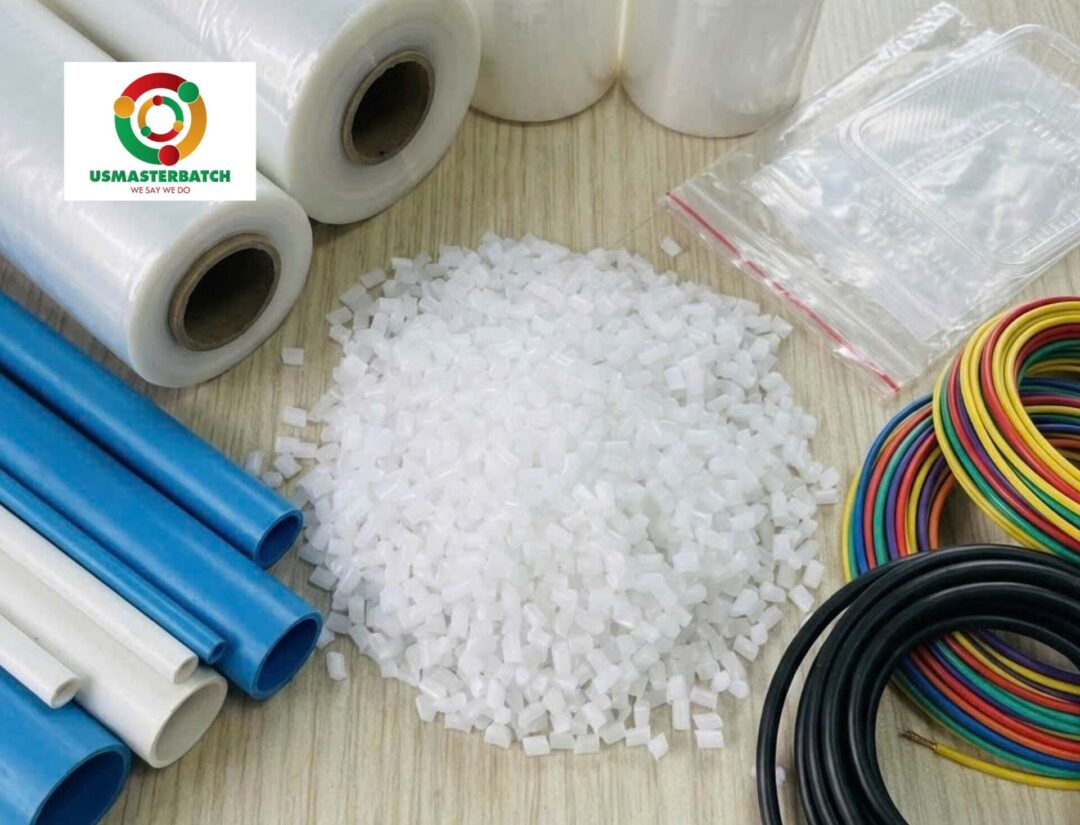
PPAs are used across different plastic processing technologies and end-use industries.
3.1 Film and Packaging
In blown film and cast film production, PPAs help eliminate surface defects, allow higher extrusion speeds, and improve optical clarity. This is especially important for food and industrial packaging films.
3.2 Injection Molding
In injection molding, processing aids improve melt flow into complex molds, reduce cycle times, and enhance surface quality, resulting in better dimensional accuracy and fewer defects.
3.3 Pipes and Profiles
For pipe and profile extrusion, polymer processing aids reduce die pressure, improve surface smoothness, and ensure uniform wall thickness.
3.4 Wire and Cable
In wire and cable insulation applications, polymer processing aids help achieve stable extrusion, smooth surfaces, and reliable insulation performance.
4. Conclusion
Polymer processing aids are indispensable additives in the plastics industry. By improving processing efficiency, reducing defects, and enhancing surface quality, they help manufacturers achieve stable production and cost optimization. With different types available — such as fluoropolymer, silicone-based, wax-based, and acrylic processing aids — selecting the appropriate PPA depends on the polymer type and processing requirements.
As plastic processing technologies continue to advance, polymer processing aids will remain a key component in high-performance polymer formulations.