Polyester Fabric – Composition, Properties, and Industrial Applications
Polyester fabric is one of the most versatile and widely used materials in the global textile, packaging, and industrial sectors. Its outstanding mechanical strength, chemical stability, and cost-effectiveness have made polyester a preferred choice for manufacturers for decades. With the rapid advancement of polymer technology and the increasing demand for more durable and sustainable materials, polyester continues to evolve through its compatibility with modern additives such as color masterbatch, filler masterbatch, and functional masterbatch.
At US Masterbatch, we specialize in delivering high-performance masterbatch solutions that upgrade the quality, durability, and processing efficiency of polyester-based products. This article explores the composition, benefits, and applications of polyester fabric — while highlighting how masterbatch technology plays a critical role in enhancing its performance.
1. What Is Polyester Fabric Made Of?
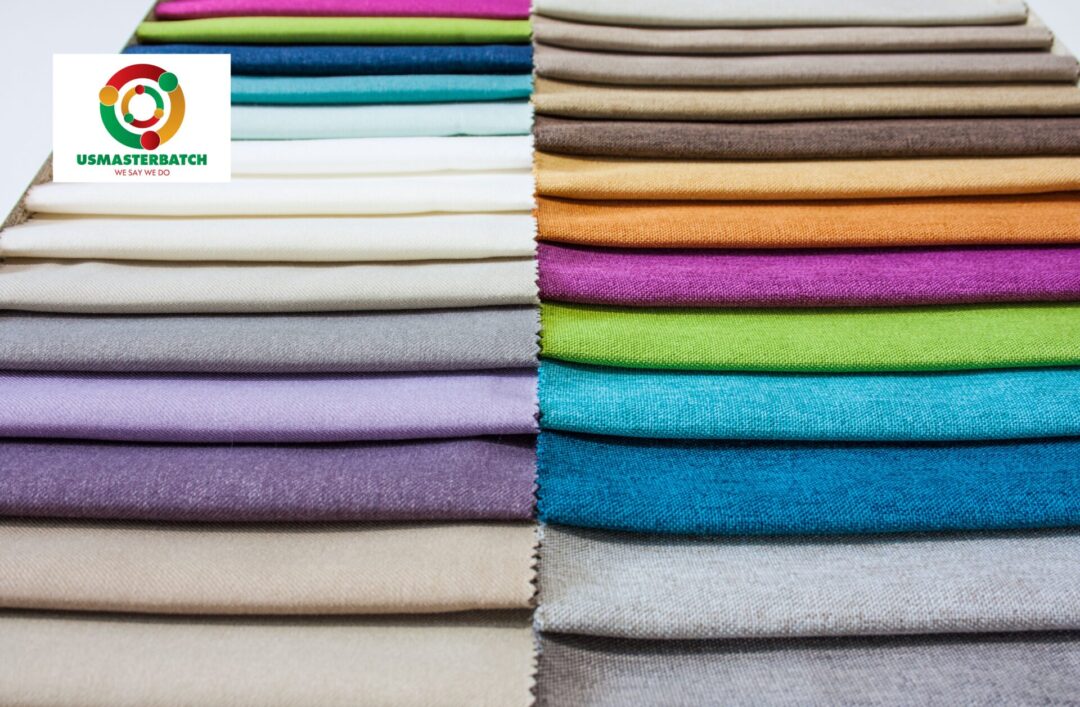
Polyester is a synthetic polymer created through a chemical reaction known as esterification. The most common form of polyester used in fabric production is Polyethylene Terephthalate (PET). PET is produced by reacting terephthalic acid (PTA) with ethylene glycol (EG) under high temperature and pressure. This process forms long polymer chains that give polyester its exceptional durability and resistance to environmental stress.
Key Components of Polyester Fabric
- Polyethylene Terephthalate (PET) Resin
PET serves as the primary raw material, accounting for over 90% of polyester fibers produced globally. Its molecular structure provides strength, flexibility, and resistance to heat and chemicals. - Functional Additives
Depending on performance requirements, various additives can be introduced into the polyester matrix, including:- UV stabilizers to protect fabric from sunlight degradation
- Flame retardant additives for higher safety standards
- Anti-bacterial agents for hygiene-focused textiles
- Softening agents to improve fabric feel
- Anti-static additives for electronics or technical fabrics
- Color masterbatch for accurate and long-lasting coloration
- Blended Fibers
Polyester is often combined with natural or synthetic fibers to achieve desired properties:- Polyester/Cotton (TC, CVC) for comfort and breathability
- Polyester/Spandex for stretchability
- Polyester/Rayon for improved softness and drape
The combination of PET with specialized additives and blends allows manufacturers to tailor polyester performance for diverse industries.
2. Key Performance Properties of Polyester Fabric
Polyester remains an industry favorite due to its exceptional physical and functional characteristics. The following properties make it suitable for both everyday and high-performance applications:
High Strength and Durability
Polyester fibers exhibit excellent tensile strength and abrasion resistance, making them suitable for heavy-use applications such as workwear, bags, and technical fabrics.
Excellent Form Stability
Polyester resists shrinking, wrinkling, and deformation. It maintains its shape even after repeated washing, making it ideal for apparel and home textiles.
Fast-Drying and Moisture-Resistant
Due to its hydrophobic nature, polyester dries quickly and absorbs very little moisture — an essential advantage in sportswear and outdoor fabrics.
Superior Color Fastness
When combined with high-quality color masterbatch, polyester shows excellent resistance to fading, even under heat, washing, or UV exposure.
Cost-Effectiveness
Compared with natural fibers, polyester offers a balance of performance and affordability, making it widely accessible for large-scale manufacturing.
Easy Processing
Polyester is suitable for multiple processes, including spinning, weaving, circular knitting, warp knitting, coating, extrusion, and film production.
3. Industrial Applications of Polyester Fabric
Polyester’s adaptability makes it one of the most widely used materials across industries. Its applications include:
a. Apparel & Fashion
- T-shirts, polo shirts, uniforms, and corporate wear
- Jackets, windbreakers, and outerwear
- Blended fabrics for high-end fashion and everyday clothing
The combination of performance and comfort allows manufacturers to create fabrics with precise mechanical and aesthetic characteristics.
b. Sportswear and Outdoor Products
Polyester is preferred for activewear because of its:
- Quick-drying properties
- Lightweight structure
- Durability under movement and stress
Common uses include sports jerseys, leggings, running shorts, and waterproof jackets.
c. Home Textiles
Polyester is widely used in:
- Upholstery fabrics
- Curtains, drapes, and blinds
- Sofa covers and decorative textiles
- Carpets and floor coverings
Its ability to retain shape and resist fading makes it a long-lasting choice for interior applications.
d. Automotive & Industrial Textiles
Polyester provides strength and stability for demanding technical applications, such as:
- Car seat fabrics and interior linings
- Air filters and industrial filtration media
- Geotextiles for construction
- Conveyor belts, ropes, and safety straps
These applications require materials that can withstand significant mechanical stress, temperature changes, and harsh environments.
e. Packaging and Nonwoven Applications
Polyester is also widely used in technical packaging and nonwoven products, including:
- Nonwoven bags
- Industrial wipes
- Synthetic leather backing
- Insulation materials
The high dimensional stability of polyester makes it suitable for precision-required manufacturing.

4. How US Masterbatch Enhances Polyester Performance
Polyester’s performance can be significantly improved through advanced masterbatch and additive solutions. As a leading manufacturer, US Masterbatch provides customized formulations that enhance both functional and aesthetic properties of polyester.
Color Masterbatch
Our high-dispersion pigments deliver:
- Outstanding color consistency
- Heat resistance suitable for PET spinning
- UV stability for long-term outdoor exposure
Filler Masterbatch
Used to:
- Reduce production cost
- Improve stiffness and dimensional stability
- Enhance printability and processability
- Lower energy consumption during extrusion or molding
Functional Additives
We supply a wide range of additives specifically engineered for polyester applications:
- UV stabilizer masterbatch
- Anti-static masterbatch
- Anti-bacterial and anti-fungal masterbatch
- Flame retardant additives
- Optical brighteners for brightness enhancement
Each formulation is tailored to customer requirements while ensuring compatibility with polyester processing conditions.
5. Why Manufacturers Trust US Masterbatch
At US Masterbatch, we combine technical expertise with modern production technology to deliver consistent, high-quality solutions. Our strengths include:
- Over a decade of experience in masterbatch and polymer additives
- State-of-the-art production lines and QC systems
- Fast lead times and stable supply for global customers
- Competitive pricing with premium material quality
- Custom formulations for specific applications
- Expert technical support for processing and performance optimization
We work closely with textile, packaging, automotive, and industrial manufacturers to ensure their polyester products achieve maximum performance and reliability.
6. Partner with US Masterbatch for Superior Polyester Products
Polyester will continue to play a crucial role in global manufacturing, and its performance can be significantly elevated with the right masterbatch solutions. Whether you are producing fibers, fabrics, films, or molded components, US Masterbatch is ready to support your production with advanced, efficient, and sustainable additives.
📨 Contact US Masterbatch today to request a consultation, product sample, or a customized formulation tailored to your polyester application.