White Colorant & Applications in Plastics Industry
White Colorant is foundational in modern plastics, influencing appearance, performance, durability, and protection across industries. From packaging and agriculture to medical and infrastructure applications, understanding how white masterbatch works—and what defines its quality—is essential for manufacturers aiming to optimize both cost efficiency and product performance.
-
What is White Colorant (White Masterbatch)?
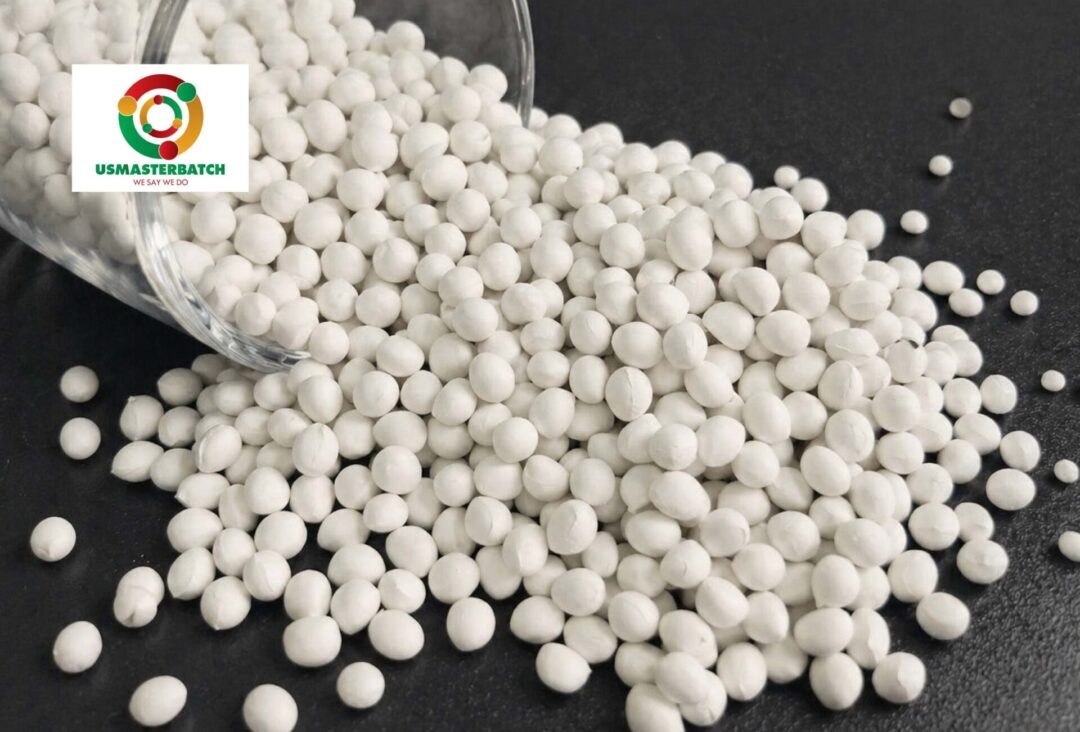
(Illustration purpose only)
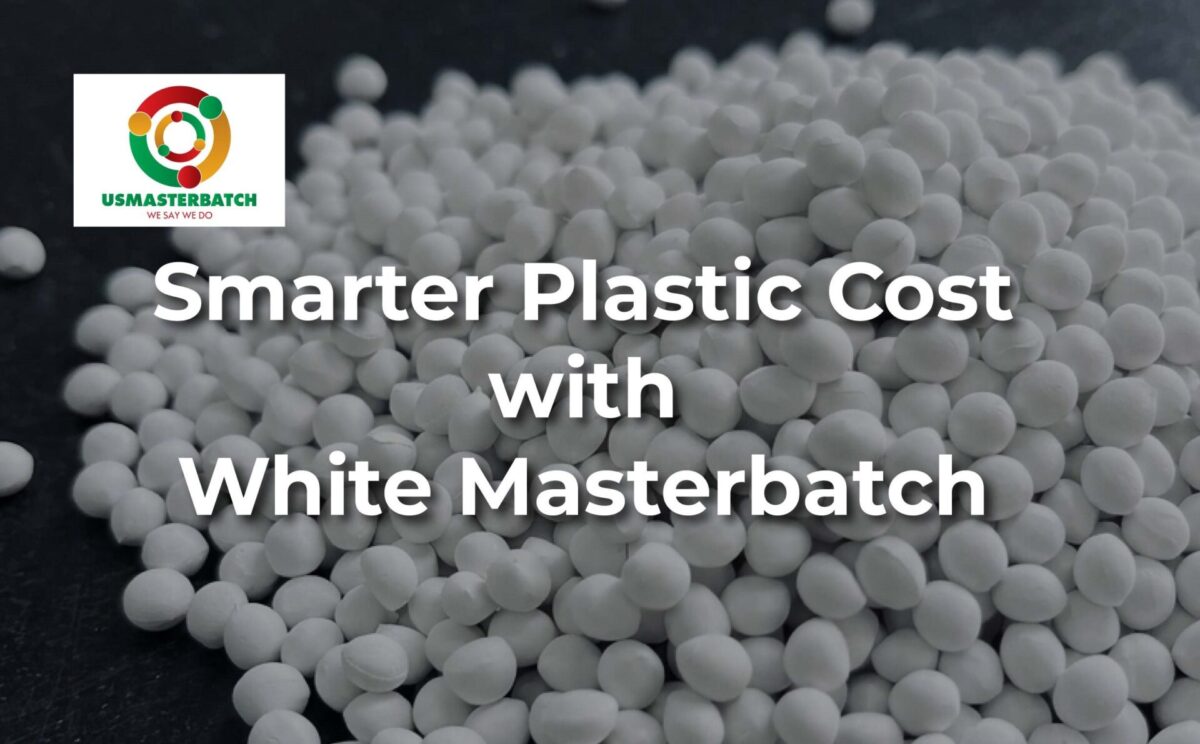
At its simplest level, a white colorant for plastics is a concentrated mixture of pigments and a carrier resin. However, the “magic” ingredient that makes plastic white is Titanium Dioxide (TiO2).
TiO2 is the world’s premier white pigment because of its exceptionally high refractive index. This means it has an incredible ability to scatter light, providing maximum whiteness and opacity even at very low concentrations.
The Anatomy of High-Quality White Colorant:
- The Pigment: High-grade Rutile Titanium Dioxide (TiO2). Rutile is preferred over Anatase for industrial plastics because of its superior weatherability and higher opacity.
- The Carrier Resin: This is the base polymer (usually PE, PP, or PS) that allows the pigment to blend into your production line. At US MASTERBATCH, we ensure the carrier resin is perfectly compatible with your end-product to avoid “fisheyes” or weak spots.
- Functional Additives: Premium white masterbatches often include optical brighteners, ultraviolet (UV) stabilizers, and processing aids to ensure smooth extrusion.
-
Science: Why TiO2 Matters
To understand why TiO2 is the gold standard, we must look at how it interacts with light. Unlike other white minerals (like Calcium Carbonate or Talc), TiO2 particles are engineered to be exactly 0.2 to 0.3 microns in size.
This specific size is the “sweet spot” for scattering visible light. When sunlight hits a plastic film containing TiO2, the light is reflected rather than passing through. This provides two critical benefits:
- Opacification: It hides whatever is inside the packaging (e.g., preventing light from spoiling milk or medicine).
- UV Protection: TiO2 acts as a physical shield, absorbing harmful UV rays that would otherwise break the polymer chains and cause the plastic to become brittle.
-
Top Applications for White Colorant

(Illustration purpose only)
As a leading supplier to over 80 countries, we see White Masterbatch used in virtually every sector. Here are the most prominent applications
Packaging (Food and Consumer Goods)
This is the largest market for white colorants. Think of milk bottles, yogurt cups, and standing pouches.
- The Requirement: The masterbatch must be FDA-approved and have excellent dispersion to ensure a smooth, high-gloss surface that looks premium on retail shelves.
Agricultural Films (Mulch and Silage)
In agriculture, white colorant is used in “white/black” mulch film. The white side faces the sun to reflect heat and light back onto the plants, while the black side prevents weed growth.
- The Requirement: Extreme UV stability. These films must survive 6 to 24 months in intense tropical sunlight without degrading.
Protective Piping and Infrastructure
White PVC or PE pipes are common in telecommunications and water management.
- The Requirement: Long-term thermal stability and high opacity to protect internal cables or fluids from temperature fluctuations
Medical and Hygiene
From surgical masks to medical-grade breathable films and diaper back-sheets.
- The Requirement: Purity and safety. There can be zero contaminants in the masterbatch, and it must comply with strict medical regulations.
-
How to Evaluate White Colorant Quality
In my decade of experience, I’ve seen many manufacturers make the mistake of buying the “cheapest” white masterbatch. This often leads to higher costs in the long run. Here is what you should evaluate:
- TiO2 Content: Does the masterbatch contain 40%, 60%, or 75% TiO2? Higher loading means you can use a lower “Let-Down Ratio” (LDR), which saves you money on shipping and storage.
- Dispersion: If the TiO2 is not dispersed perfectly, you will see white “specks” or streaks in your product. This is a sign of poor manufacturing.
- Whiteness Index: Not all whites are the same. Some are “bluish white” (perceived as cleaner/brighter), while others are “yellowish white”. Your supplier should be able to provide a spectrophotometer reading.
- Melt Flow Rate (MFR): The masterbatch must melt at a similar rate to your virgin resin. If it doesn’t, your production speed will drop, and your machinery will face higher wear and tear.
-
The US MASTERBATCH Advantage
At US MASTERBATCH, white colorant is one of our flagship products. We don’t just “mix” pigment; we engineer it.
- Customization: We offer different TiO2 loadings based on your budget and technical needs.
- Consistency: Our 4-factory setup uses automated dosing to ensure the whiteness of the batch you buy today is identical to the one you buy next year.
- Global Standards: All our white master batches are REACH and RoHS compliant, ensuring your products can be exported to any market, including the EU and North America.
Conclusion
White colorant is the foundation of the modern plastic world. It provides the canvas for branding, the shield against the sun, and the opacity for safety. Understanding the percentage of TiO2 and the quality of dispersion is the key to reducing your production costs while increasing your product quality.