What is Recycled ABS?
[US Masterbatch] As the global plastics industry faces increasing pressure from environmental regulations and sustainability requirements, Recycled ABS has become an increasingly important material solution. In addition to reducing plastic waste and conserving natural resources, it also offers significant economic benefits for many manufacturing industries.
For companies producing electronic components, household appliances, automotive parts, or industrial products, it can be an effective solution to optimize raw material costs while still maintaining product quality.
This article provides a detailed technical overview to help readers better understand recycled ABS and how to choose the right material for different applications.
1. What is Recycled ABS?
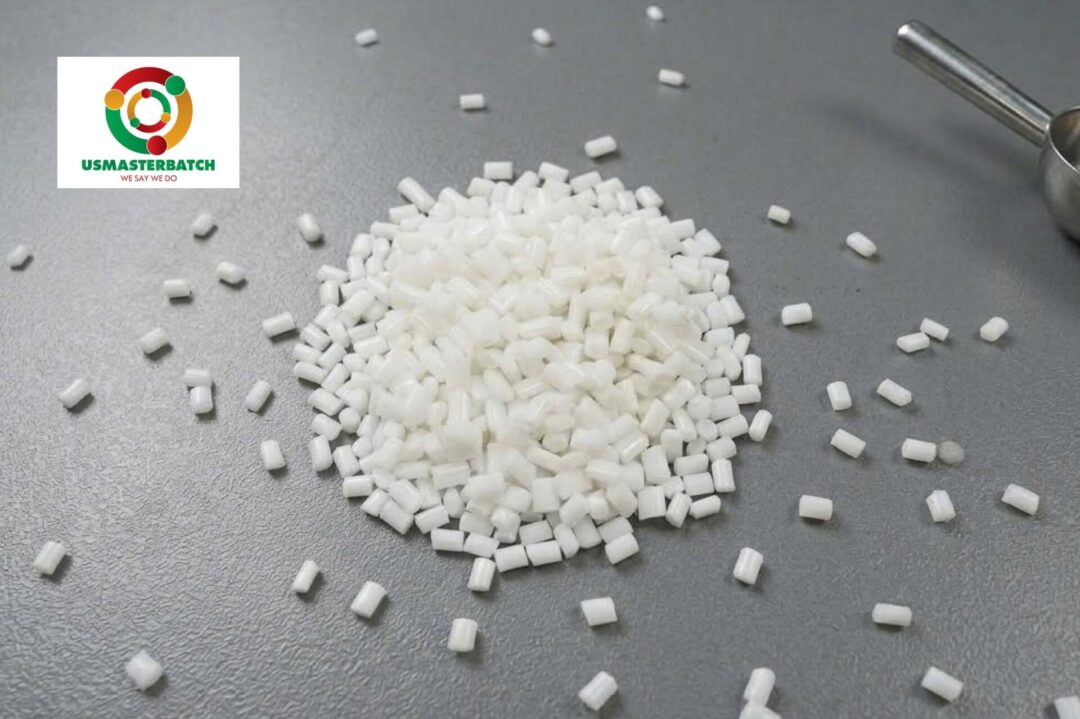
(Illustrative purposes only)
Recycled ABS is a type of ABS plastic that is produced by recycling ABS products that have already been used or industrial scrap generated during manufacturing processes. After collection, sorting, and processing, these materials are crushed, cleaned, and reprocessed into ABS pellets that can be reused in industrial production.
ABS (Acrylonitrile Butadiene Styrene) is an engineering thermoplastic well known for its high mechanical strength, excellent impact resistance, and attractive surface finish. When recycled through a proper process, it can retain many of the important mechanical properties of virgin ABS while significantly reducing raw material costs.
The raw materials used to produce recycled ABS generally come from two main sources:
Post-industrial recycled (PIR) – waste generated during manufacturing processes, such as runners, defective products, or scrap from plastic injection molding lines.
Post-consumer recycled (PCR) – ABS products that have already been used by consumers, such as electronic housings, household appliances, or automotive components.
In many industrial applications, it can partially or even completely replace virgin ABS, particularly in products that do not require food-contact or medical-grade standards.
2. Technical Characteristics of Recycled ABS
One of the main reasons recycled ABS is widely used in industry is its ability to maintain the key mechanical properties of virgin ABS, especially when produced by suppliers with advanced technology and strong quality control systems.
Mechanical Strength and Impact Resistance
ABS is well known for its excellent impact resistance due to the butadiene component in its polymer structure. Even after recycling, it can still maintain a high level of mechanical strength if the input materials are properly sorted and the recycling process is carefully controlled.
Good Processability
Recycled ABS retains the excellent processing characteristics of ABS, including:
- Injection molding
- Extrusion
- Thermoforming
This allows manufacturers to easily integrate recycled ABS into existing production lines without requiring major equipment modifications.
Dimensional Stability
ABS has low shrinkage and good dimensional stability, which is particularly important for products that require high precision such as electronic components and technical parts.
Surface Finishing Capability
ABS surfaces are easy to paint, electroplate, and post-process. With properly processed recycled ABS, the material can still achieve relatively uniform surface quality suitable for many industrial applications.
Economic and Environmental Benefits
One major advantage of recycled ABS is its ability to reduce raw material costs by approximately 15–40% compared to virgin ABS, while also reducing plastic waste and decreasing reliance on petroleum-based resources.
3. How to Identify ABS Plastic?
For raw material buyers and manufacturers, correctly identifying plastic materials is essential to ensure product quality.
Plastic Identification Codes
ABS is typically marked with the symbol ABS or classified under plastic code 7 (Other plastics) on plastic products.
Surface Observation
ABS plastic usually has a smooth, rigid, and slightly glossy surface. When lightly tapped, the material feels solid and less brittle compared to many other plastics.
Burn Test
When burned, ABS produces a yellow flame and emits a smell somewhat similar to burning rubber. However, this method is usually used only for laboratory or technical inspection purposes.
Material Testing Methods
In professional manufacturing environments, ABS is typically identified through material analysis techniques such as:
- FTIR (Fourier Transform Infrared Spectroscopy)
- DSC (Differential Scanning Calorimetry)
- Melt Flow Index (MFI) testing
4. Production Process
To ensure consistent quality and meet technical requirements, the recycled ABS production process typically involves several carefully controlled stages.
Step 1: Collection and Sorting of Raw Materials
Recycled ABS raw materials are collected from various sources such as plastic manufacturing plants, discarded electronic devices, or industrial plastic waste. The materials are then sorted to remove other plastics such as PP, PS, or PVC.
Step 2: Grinding and Cleaning
After sorting, the ABS materials are crushed into small flakes. These plastic flakes are then washed to remove dust, metals, and other contaminants.
Step 3: Melting and Pelletizing
The cleaned ABS material is fed into an extruder where it is melted and reprocessed into new plastic pellets. During this stage, manufacturers may add additives such as thermal stabilizers, strength enhancers, or color modifiers.
Step 4: Quality Inspection
Before entering the market, recycled ABS is typically tested for several technical parameters such as:
- Melt Flow Index (MFI)
- Tensile strength
- Impact resistance
- Material density
These quality control steps ensure the material meets the specific requirements of different applications.
5. Applications
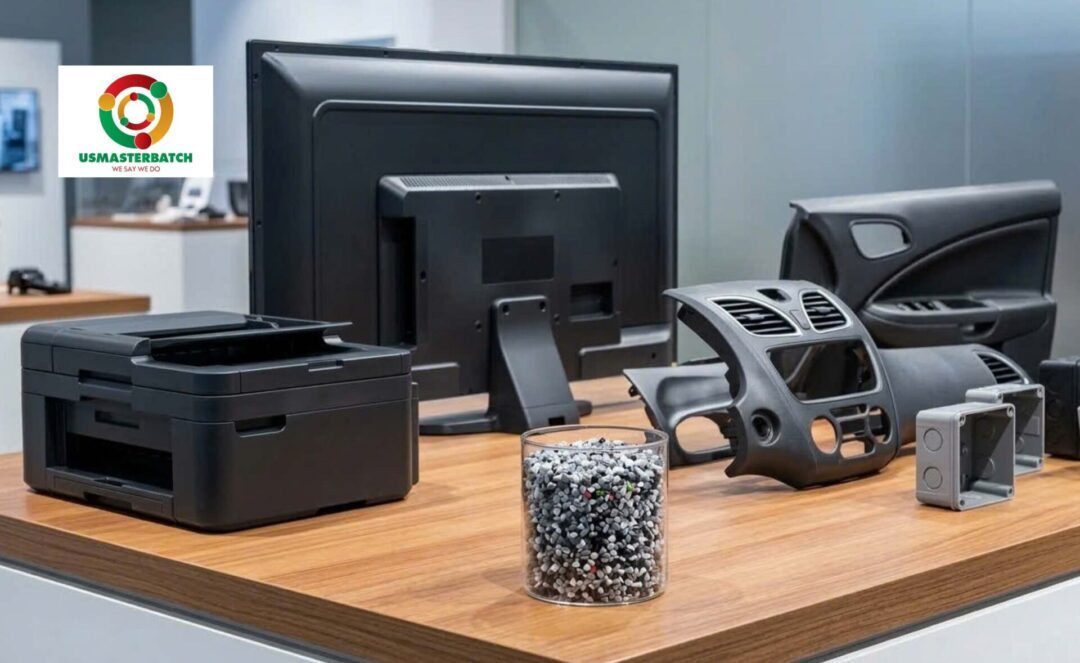
(Illustrative purposes only)
Thanks to its balance between technical performance and cost efficiency, recycled ABS is widely used across many industries.
Electronics Industry
Recycled ABS is commonly used to manufacture:
- Electronic device housings
- Printer casings
- Television and appliance covers
These products generally do not require food-contact certification, making recycled ABS a suitable material.
Automotive Manufacturing
In the automotive industry, it is used for:
- Interior trim panels
- Decorative components
- Electrical housing boxes
Using recycled plastic helps automotive manufacturers reduce costs while achieving sustainability goals.
Household Appliance Manufacturing
Many household products such as vacuum cleaners, electric fans, and technical plastic containers use recycled ABS to reduce production costs.
Industrial and Technical Equipment
Recycled ABS is also widely used in industrial components, machine housings, and various technical plastic products.
Conclusion
Recycled ABS is becoming an increasingly important material in the plastics industry due to its ability to balance technical performance, production cost, and environmental benefits. When produced by suppliers with strong quality control systems, it can meet many technical requirements in electronics, automotive, household appliances, and industrial applications.
For manufacturers, understanding the material properties, recycling process, and applications of it can help optimize raw material selection, reduce costs, and meet the growing sustainability demands of the global market.