What is Polymer Processing Aid (PPA)?
Polymer Processing Aid (PPA) has become a critical solution in the high-stakes world of plastic extrusion. Balancing high-speed production with flawless surface quality remains a constant challenge for process engineers. Common bottlenecks such as melt fracture (sharkskin), die build-up, and excessive energy consumption often disrupt operations and eat into profit margins.
This is where PPA steps in as a “secret weapon”. But what exactly is it, and why is it a cornerstone of the US Masterbatch value proposition? Let’s dive into the technical science and commercial advantages of this essential additive.
1. Defining Polymer Processing Aid (PPA)
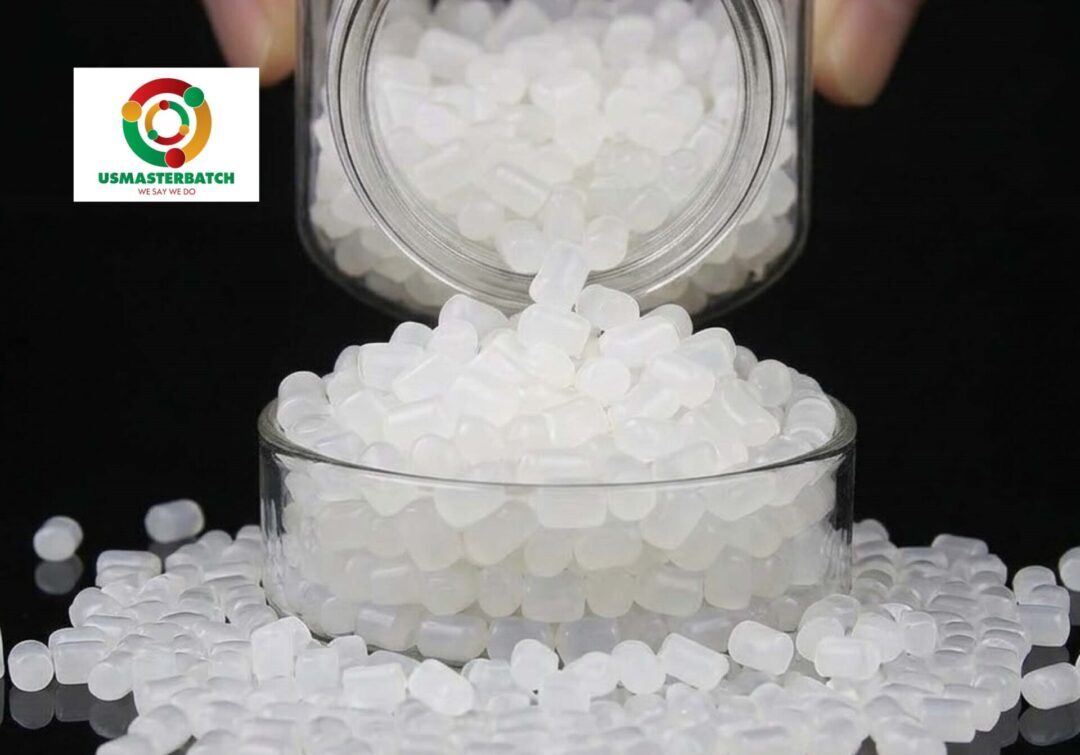
(Illustrative purpose only)
Polymer Processing Aid (PPA) is a specialized functional additive, typically based on high-performance fluoroelastomers. When added to thermoplastic resins at very low concentrations (ranging from 200 ppm to 1,000 ppm), PPA significantly enhances the processability of the polymer, while maintaining its fundamental physical properties and preserving the integrity of the final product.
At US Masterbatch, our PPA solutions are engineered for maximum compatibility with polyolefins such as LLDPE, HDPE, PP, and various engineering plastics, ensuring seamless integration into modern extrusion lines.
2. The Science of Smoothness: How PPA Works
To appreciate the impact of PPA, one must first understand the rheological dynamics within the extrusion die. Specifically, as the molten plastic moves through the die, the friction between the polymer and the metal wall creates high shear stress. Consequently, if the extrusion speed exceeds a critical threshold, the polymer melt “slips” unevenly, resulting in surface defects.
The PPA mechanism functions in three strategic phases:
- Dispersion: Once introduced, PPA particles disperse uniformly within the host resin.
- Migration: Due to their thermodynamic incompatibility with the polymer matrix, PPA molecules migrate toward the interface between the melt and the metal wall.
- Coating: A microscopic, low-friction fluoropolymer film forms on the internal surfaces of the die and screw. This acts as a permanent “lubricant layer”, allowing the melt to slide through smoothly without generating residual shear stress.
3. Key Benefits: Why PPA is a Strategic Investment?
Implementing PPA is more than a technical upgrade; it is a cost-optimization strategy for world-class manufacturers.
Eliminating Melt Fracture (Sharkskin)
The most immediate benefit of PPA is the total elimination of melt fracture. In turn, by smoothing out the flow, PPA ensures a high-gloss, transparent, and uniform surface for blown films and extruded parts, meeting the aesthetic demands of premium packaging.
Reducing Die Build-up (Plate-out)
Accumulation of degraded polymer at the die lip (commonly known as “drool”) causes streaks and forces frequent production shutdowns for cleaning. PPA prevents additives and resins from sticking to the metal, drastically extending continuous runtime and reducing maintenance costs.
Boosting Throughput and Energy Savings
By reducing internal friction, PPA can lower extrusion pressure by 10% to 25%, thereby enabling manufacturers to increase screw speeds for higher output without overloading the motor or overheating the melt. As a result, this leads to significant energy savings per ton of product.
Accelerating Color Changeovers
The lubricating layer formed by PPA prevents old resin and pigments from clinging to the equipment. This streamlines the transition between different batches, reducing scrap material and downtime during color or material switches.
4. Industrial Applications of PPA
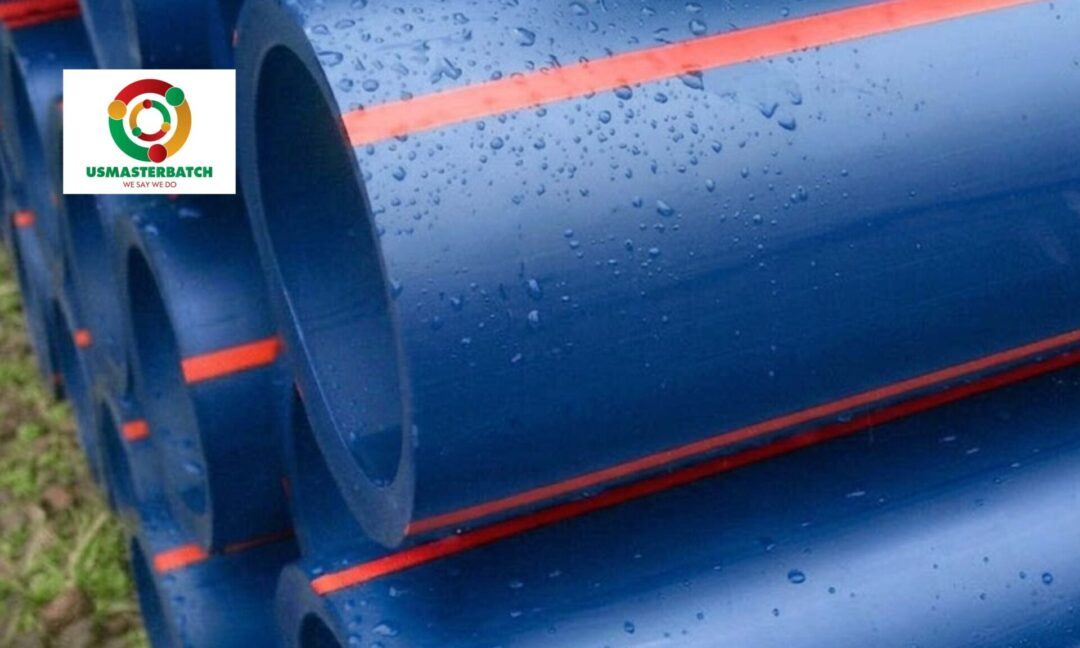
(Illustrative purpose only)
PPA is the ideal solution for processes requiring high precision and high-volume output:
- Blown Film: Used in shopping bags, agricultural films, and sophisticated multi-layer food packaging.
- Pipe and Cable Extrusion: Ensuring smooth surfaces for HDPE and PPR pipes, which enhances pressure resistance and longevity.
- Fiber and Filament: Reducing fiber breakage during high-speed spinning processes.
- Injection Molding: Improving mold-filling capabilities for complex geometries.
5. Partnering with US Masterbatch: The Global Advantage
With over a decade of expertise and a massive production capacity of 408,000 tons per year across four state-of-the-art factories, US Masterbatch is more than a supplier. We are your technical partner.
- ISO 9001:2015 Certified Quality: Every batch of our PPA undergoes rigorous testing in our modern R&D center to ensure global compliance.
- Tailored Formulations: We understand that every resin and machine setup is unique. Our experts provide customized PPA grades to maximize efficiency for your specific production line.
- Sustainability Focus: By reducing scrap rates and energy consumption, our PPA solutions directly contribute to your “Green Manufacturing” goals.
Conclusion
Polymer Processing Aid (PPA) is an indispensable tool for manufacturers aiming to stay competitive in today’s plastic industry, as it effectively bridges the gap between mechanical limitations and high-quality output.
Are you facing surface defects or looking to maximize your extrusion output? Contact the US Masterbatch specialist team today for a technical consultation and discover how our PPA solutions can transform your production efficiency.