
What are Composite Materials?
[US Masterbatch] In the history of human civilization, we have defined our progress by the materials we master: the Stone Age, the Bronze Age, and the Iron Age. Today, we are firmly living in the Age of Composites. From the sleek wings of the Boeing 787 Dreamliner to the ultra-light frames of Tour de France bicycles, composite materials are the hidden architects of modern high-performance technology. But what are Composite Materials, and why are they systematically replacing traditional metals like steel and aluminum?
1. Defining Composite Materials
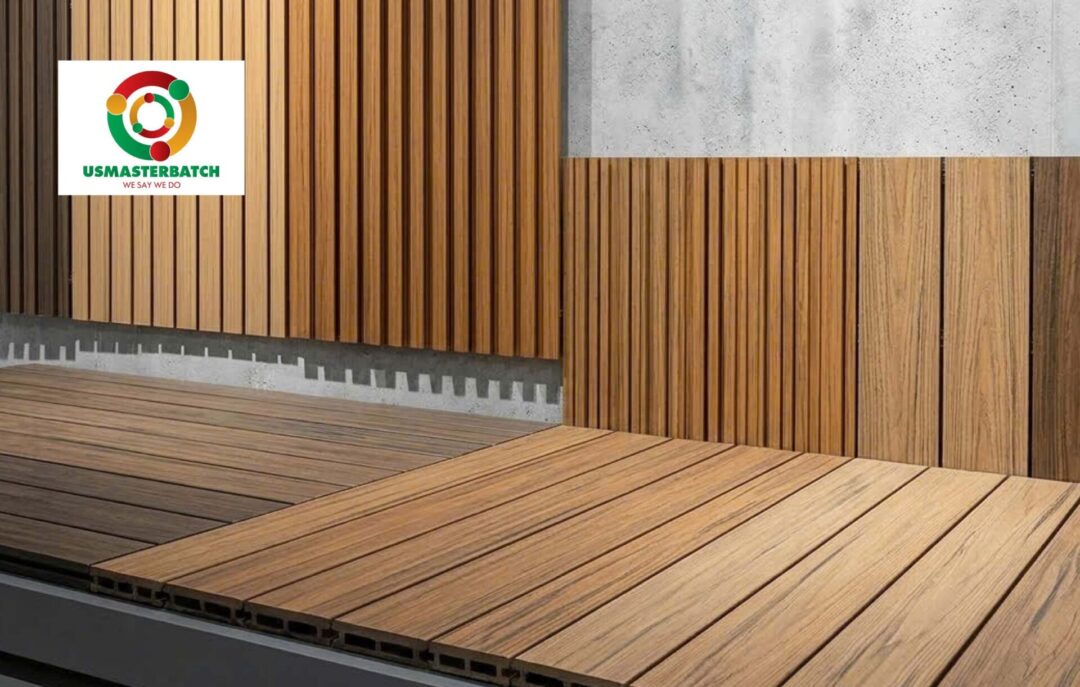
(Illustrative purposes only)
At its simplest, a composite material is formed by combining two or more constituent materials with significantly different physical or chemical properties. When merged, they create a “super-material” with characteristics that none of the individual components could achieve alone.
The critical distinction of a composite is that the internal components do not dissolve or blend into each other. They remain separate and distinct within the finished structure, working in tandem to enhance performance.
2. The Anatomy of Composite Materials: Matrix vs. Reinforcement
To understand how these materials work, you have to look at their two primary “ingredients”:
A. The Matrix (The Body)
The matrix is the continuous phase that surrounds the other material. Its primary jobs are to hold the reinforcement in place, protect it from environmental damage (like moisture or abrasion), and share the load between the fibers.
- Polymer Matrix (PMC): The most common type, using resins like Epoxy, Polyester, or Vinyl Ester.
- Metal Matrix (MMC): Uses metals like Aluminum or Titanium for high-temperature environments.
- Ceramic Matrix (CMC): Used in extreme heat scenarios, such as jet engine components.
B. The Reinforcement (The Muscle)
This is the component that provides strength and stiffness. It is usually embedded within the matrix in the form of fragments or long fibers.
- Glass Fibers: Cost-effective and strong, used in “Fiberglass”.
- Carbon Fibers: The gold standard for high strength-to-weight ratios.
- Aramid (Kevlar): Famous for impact resistance and bulletproof applications.
3. The “Why”: Advantages Over Traditional Materials
The shift toward composites isn’t just a trend; it’s driven by physics and economics.
High Strength-to-Weight Ratio
This is the “Holy Grail” of engineering. Composite materials can be designed to be as strong as steel but at a fraction of the weight. In the automotive and aerospace industries, less weight equals lower fuel consumption and higher speed.
Corrosion Resistance
Unlike iron or steel, composites do not rust. They are chemically inert to most acids, salts, and oxidation. This makes them the primary choice for oil rigs, chemical storage tanks, and marine vessels that spend decades in harsh saltwater.
Tailored Design (Anisotropy)
Metal is “isotropic”, meaning it has the same strength in every direction. Engineers, however, can align composite fibers in specific directions to handle specific stresses. If a bridge beam only needs to be strong lengthwise, you can put all the fibers in that direction, saving material and cost elsewhere.
4. Major Types of Composite Materials in the Modern World
Carbon Fiber Reinforced Polymer (CFRP)
CFRP is the elite of the composite world. It is incredibly stiff and light. You will find it in Formula 1 chassis, professional tennis rackets, and the fuselage of modern spacecraft. Its only drawback is the high cost of production.
Fiberglass (GFRP)
By far the most widely used composite. It’s found in everything from your bathtub and home insulation to wind turbine blades and boat hulls. It offers a perfect balance between durability and affordability.
Concrete: The Ancient Composite
Most people don’t realize that Concrete is a composite. It consists of aggregate (rocks/sand) bound by a cement matrix. When we add steel rebar, it becomes Reinforced Concrete, a complex composite that allows us to build skyscrapers.
5. Industrial Applications: Where Do They Live?

(Illustrative purposes only)
Aerospace & Defense
Composites are the reason modern planes can fly longer distances. The Airbus A350 XWB is built with over 50% composite materials. This reduction in weight allows airlines to carry more passengers while burning less fuel.
Renewable Energy
The green energy revolution literally rides on composites. Wind turbine blades can exceed 100 meters in length. Only carbon fiber and fiberglass composites can provide the necessary stiffness to prevent the blades from snapping under high wind loads while remaining light enough to spin.
Medicine
In the medical field, carbon fiber is used for prosthetic limbs because it mimics the natural “spring” of human bone and muscle. It is also “radiolucent”, meaning X-rays can pass right through it, making it ideal for surgical imaging tables.
6. The Challenges: Cost and Sustainability
Despite their brilliance, composites face two major hurdles:
- Manufacturing Complexity: Unlike metal, which can be melted and poured, composites often require specialized “clean rooms”, vacuum bagging, and high-pressure ovens (autoclaves).
- Recycling: Because the plastic resin and the fibers are tightly bonded, they are very difficult to separate. Most old wind turbine blades or boat hulls end up in landfills.
The Future: Scientists are currently developing Bio-Composites — using natural fibers like flax or hemp and bio-resins made from corn — to create a “circular economy” where materials can eventually decompose.
Conclusion
Composite materials represent the pinnacle of human material science. By breaking away from the limitations of single elements and combining the best traits of different substances, we have unlocked the ability to build taller, fly further, and move faster than ever before. As we solve the recycling puzzle, composites will undoubtedly remain the backbone of 21st-century infrastructure.