
Types of Plastics for Injection Moulding
In the world of modern manufacturing, injection moulding technology serves as the backbone of the plastics industry. From tiny electronic components to massive automotive parts, most are created through this process. However, the key to creating a perfect product lies not only in modern machinery but also in selecting the right plastics material. This article explores selecting the right plastics for injection moulding in the production process at the factories.
1. What is Injection Moulding?
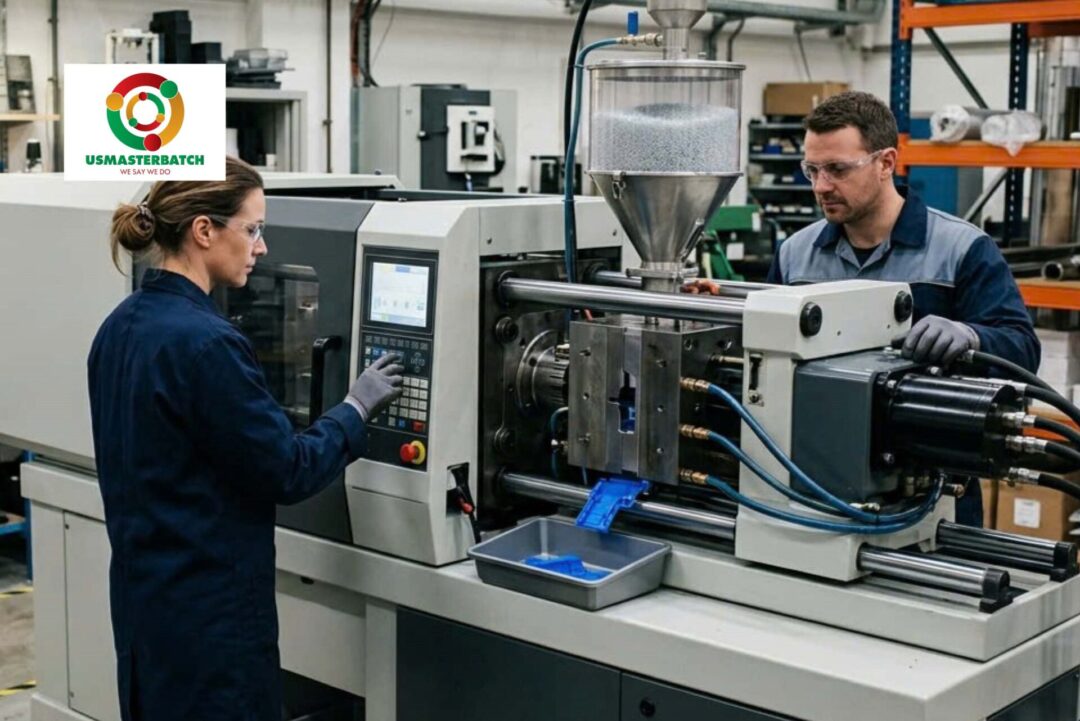
(Illustrative purposes only)
Injection moulding is a manufacturing process where molten plastic material is injected into a mold. The basic process involves heating plastic granules until they reach a liquid state, then, under extremely high pressure, the plastic is pumped into a mold cavity. Once the plastic cools and solidifies, the mold opens, and the finished product is ejected.
The greatest advantage of this technology is the ability to mass-produce complex shapes with high precision and low unit costs at scale.
2. US Masterbatch – Your Trusted Partner in Production Optimization
Choosing the right type of plastics for injection moulding among hundreds of variations on the market is a significant challenge for businesses. That is why US Masterbatch is here.
We are more than just a provider of high-quality resin, color masterbatch, and additives; we are a strategic partner helping you decode technical challenges. With deep expertise in the polymer industry, US Masterbatch is committed to advising customers on the most optimal material solutions, balancing product performance with production costs. We understand that every project is unique, and our team of experts is always ready to support you from raw material selection to the final output.
3. Why is Understanding Types of Plastics for Injection Moulding Important?
Why can’t you just use “general plastic” for every product? The answer lies in the unique physical and chemical properties of each polymer. Understanding these types brings immense benefits:
- Cost Optimization: Selecting the right plastic helps minimize scrap, shorten cycle times, and save energy.
- Ensuring Durability: Every product has different requirements for stiffness, heat resistance, or elasticity. Choosing the wrong material can lead to cracking, breaking, or deformation during use.
- Aesthetics: Some plastics offer a mirror-like gloss, while others are suited for matte surfaces or easy color absorption.
- Regulatory Compliance: For the food or medical industries, selecting plastics that meet FDA or biosafety standards is mandatory.
4. Analysis of the Most Common Plastics in Injection Moulding
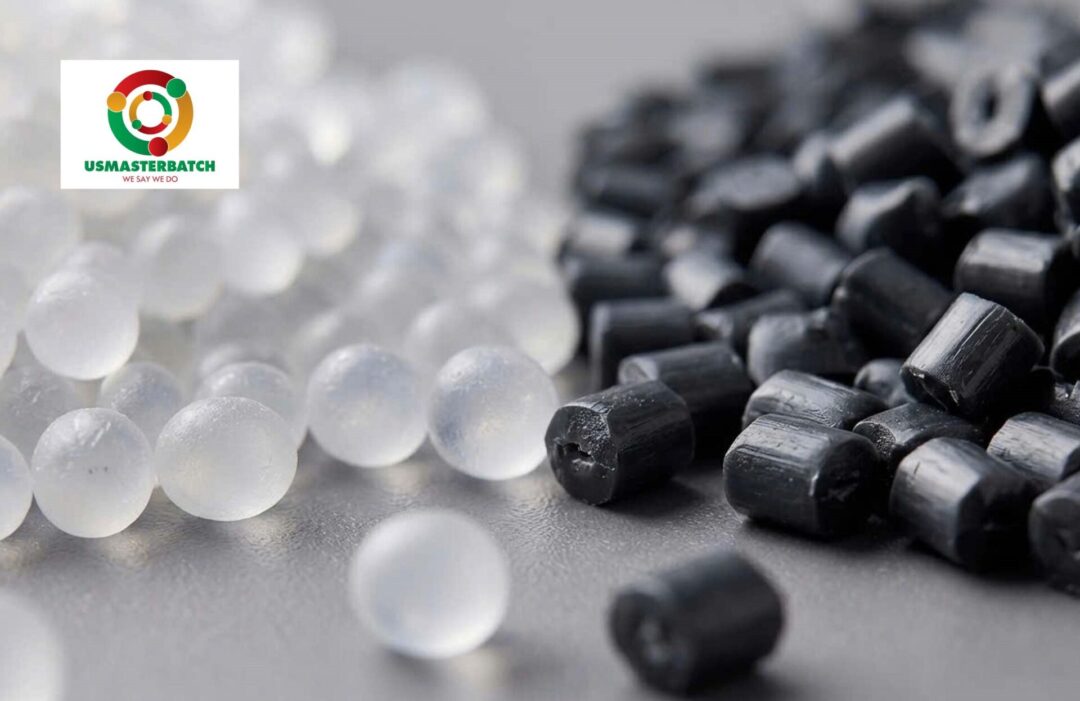
(Illustrative purposes only)
Below are the types of thermoplastics that US Masterbatch frequently recommends to customers:
4.1. Polypropylene (PP)
PP is the “king” of the injection moulding industry due to its versatility and low cost.
- Characteristics: Good chemical resistance, high elasticity, and excellent water resistance.
- Applications: Food containers, bottle caps, toys, and household components.
4.2. Acrylonitrile Butadiene Styrene (ABS)
If you need a plastic that is tough, impact-resistant, and has a high-quality finish, ABS is the number one choice.
- Characteristics: High mechanical strength, good heat resistance, easy to process, and electroplate-friendly.
- Applications: Computer housings, keyboards, automotive parts, and helmets.
4.3. Polyethylene (PE)
This includes two main lines: HDPE (High-Density) and LDPE (Low-Density).
- Characteristics: HDPE is very stiff and load-bearing, while LDPE is more flexible. Both have superior moisture resistance.
- Applications: Containers, bottles, and outdoor toys.
4.4. Polycarbonate (PC)
This is a high-end engineering plastic, famous for being as transparent as glass but hundreds of times stronger.
- Characteristics: Extreme impact resistance, high heat resistance, and excellent optical clarity.
- Applications: Safety glasses, car light lenses, medical devices, and skylights.
4.5. Polyamide (Nylon – PA)
An engineering plastic that replaces metal in many applications thanks to its durability and self-lubricating properties.
- Characteristics: Excellent wear, chemical, and heat resistance. However, it does tend to absorb moisture.
- Applications: Gears, bearings, electrical connectors, and engine components.
4.6. Polystyrene (PS)
Includes GPPS (transparent, brittle) and HIPS (high impact).
- Characteristics: Easy to mold, low cost, and good rigidity.
- Applications: Food trays, CD cases, and disposable items.
5. Factors to Consider When Selecting Types of Plastics for Injection Moulding
To choose the most suitable plastic, US Masterbatch always recommends customers consider four key factors:
- Mechanical Requirements: Does the product need to withstand force, impact, or flexibility?
- Usage Environment: Will the product be exposed to sunlight (UV rays), chemicals, or high temperatures?
- Shrinkage: Each type of plastic has a different shrinkage rate after cooling. This directly affects the precise dimensions of the mold.
- Colorability: Some plastics absorb color better than others, affecting the product’s final appearance.
6. Conclusion
Injection moulding is a sophisticated process where the combination of machinery, mold, and plastic material must reach perfect harmony. Understanding the pros and cons of plastics for injection moulding like PP, ABS, PC, or PA not only helps you create high-quality products but also enhances your competitiveness in the market.
However, knowledge of plastics for injection moulding is vast and constantly evolving with new technology trends. Do not let material difficulties hinder your production process.
Contact US Masterbatch for Expert Consultation
At US Masterbatch, we take pride in being leading experts in providing resin and additive solutions. If you are unsure which plastics for injection moulding to choose for your upcoming project, or want to improve your current injection moulding process to reduce costs and increase quality, contact us.
📧 Email: info@usmasterbatch.com