
Talc Masterbatch: Global Industrial Applications
[US Masterbatch] In today’s polymer engineering landscape, Talc masterbatch has evolved from a simple mineral filler into a revolutionary “game-changer” for global manufacturing. For instance, for production engineers and procurement officers, transitioning from 100% virgin resins to high-performance talc-filled composites is no longer an optional cost-saving measure — it is a competitive necessity. By leveraging micronized mineral reinforcement, manufacturers can achieve a significant 2:1 reduction in primary polymer usage while still maintaining or even exceeding structural integrity
-
Chemical Composition and Molecular Architecture
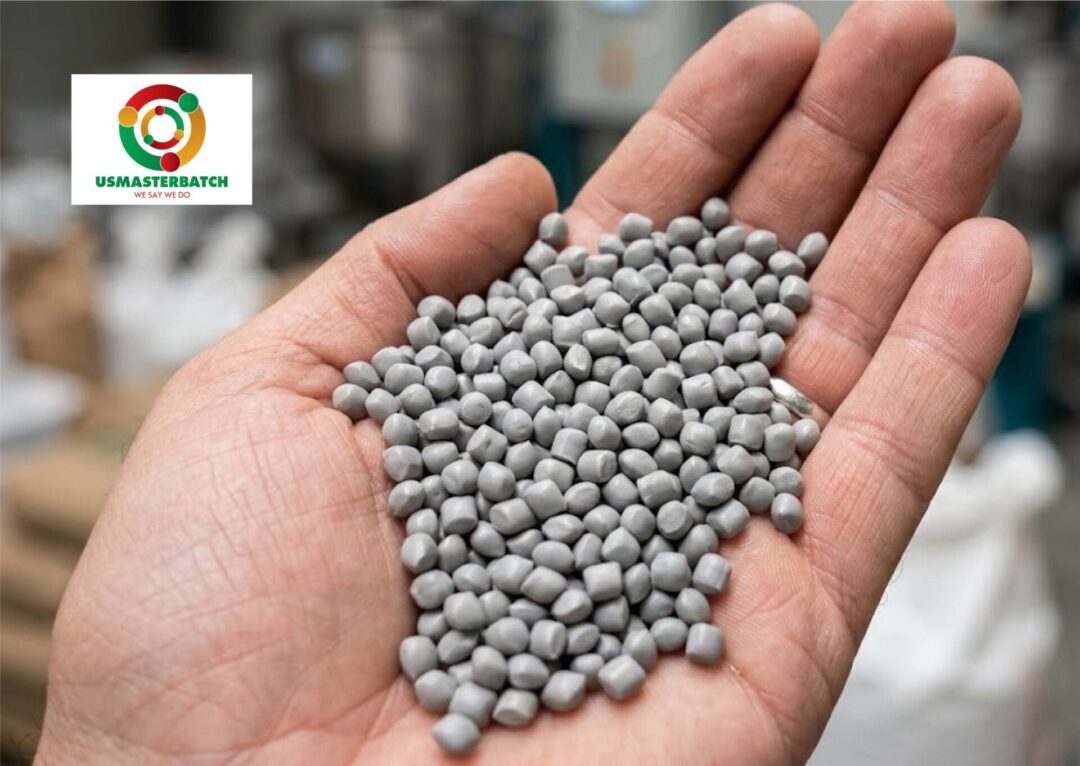
(Illustrative purpose only)
The strategic efficacy of any mineral filler depends on its chemical purity and crystalline structural integrity. From a chemical perspective, Talc in Talc masterbatch is a hydrated magnesium silicate, is highly valued for its unique “platy” morphology, which allows for superior rheological optimization during plastic processing.
- Structural Formula: (Mg6)[Si8]O20(OH)4 or Mg3Si4O10(OH)2.
- Primary Components: High-grade talc typically consists of Magnesium oxide (MgO ~30–31%), Silicon dioxide (SiO2 ~60–67%), and chemically bound water (~4.8%).
- Crystalline Structure: It is composed of a “brucite layer” (magnesium hydroxide) sandwiched between two silica layers. These layers are held together by weak van der Waals bonds, creating a characteristic “slippery” feel and allowing for excellent dispersion within the polymer matrix.
Thermal stability is another key characteristic of talc. It remains chemically stable up to its dehydroxylation point at approximately 900°C. Beyond this temperature, it recrystallizes into anhydrous magnesium silicate phases, eventually reaching a melting point of around 1500°C
-
Key Technical Properties: The “Soft Stone” Advantage
Although Talc is the softest mineral on Earth, with a Mohs hardness of 1, in Talc masterbatch this property provides significant processing advantages. This physical softness belies its immense utility as a mechanical reinforcer.
- Inertness and Food Safety: Talc is chemically inert and non-reactive. This makes it a premier choice for food-contact applications, complying with stringent FDA and ISO standards to ensure no harmful migration into consumables.
- Warpage Control and Thermal Resistance: The platy nature of micronized talc particles significantly improves heat deflection temperatures. This reduces shrinkage and prevents dimensional deformation (warpage) in environments exposed to heat, such as microwaveable trays.
- Equipment Protection: Unlike harder minerals like calcite, talc acts as a lubricant within the extruder. This minimizes equipment wear and tear, extending the operational lifecycle of screws and barrels.
Hence, to maintain high-precision technical grades, quality control involves EDTA complexometric titration to ensure consistent magnesium and calcium ratios, providing a “sharp endpoint” for purity verification.
-
Compatibility of Talc Masterbatch with Different Polymer Matrices
The selection of the base resin — typically Polyethylene (PE) or Polypropylene (PP) — is a critical factor in optimizing the performance of Talc masterbatch.
- Polypropylene (PP): Talc acts as a nucleating agent, increasing stiffness and heat resistance. PP-talc composites can effectively replace metal in non-stressed automotive components, facilitating significant vehicle lightweighting.
- Polyethylene (PE): In blown film applications, superfine talc masterbatch is unparalleled. It can reduce oxygen transmission by 80% and moisture vapor transmission by 70%, which is essential for packaging oily foods or for use in geomembranes.
- Amorphous Polymers (PS & ABS): For Polystyrene, the addition of talc at a 40% loading rate can increase the perturbation modulus from 23,800 kg/cm2 to a staggering 58,800 kg/cm2, while simultaneously boosting tensile yield strength.
-
High-Value Industrial Applications
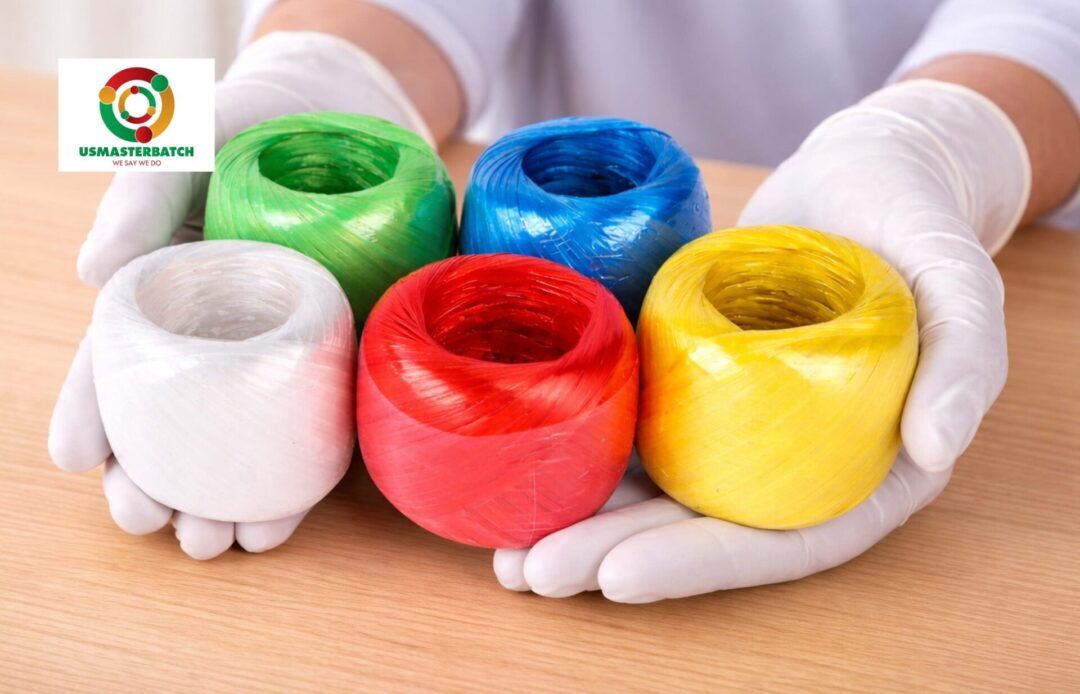
(Illustrative purpose only)
Talc masterbatch applications are pervasive, spanning from infrastructure to high-end consumer goods:
- Food Packaging & Housewares: Critical for microwaveable containers where rigidity and oil resistance are paramount. Case studies show that integrating talc can resolve container deformation issues while reducing resin costs by up to 20%.
- Automotive & Electronics: Used in dashboards and interior trims for lightweighting. It also improves the rigidity and surface gloss of HIPS (High Impact Polystyrene) products, reducing breakage during transit.
- Construction: Extruded pipes, fencing, and moisture-proof geomembrane cloths rely on talc for structural integrity.
- Blown Film & Raffia: Shopping bags and industrial nets require the high film integrity provided by micronized talc particles.
-
The Global Market Landscape
Sourcing high-quality talc masterbatch requires understanding the global centers of excellence:
- China: The commanding export powerhouse, offering high-volume, vertically integrated solutions for over 70 countries.
- India: A cost-optimized production hub characterized by increasing digitization in procurement.
- Italy: The high-precision specialist, offering REACH-compliant and pharmaceutical-grade materials with ISCC PLUS certification for sustainability.
-
Future-Proofing with Talc Masterbatch
Integrating talc masterbatch is a strategic trifecta: it delivers massive cost reduction via the 2:1 polymer reduction hook, provides superior mechanical reinforcement, and ensures environmental sustainability through reduced virgin polymer consumption. In this context, to remain competitive in a volatile global market, manufacturers must transition toward these mineral-reinforced composites. Therefore, it is no longer just a tactical adjustment; it is a core strategy for industrial innovation and economic resilience in the 21st century.