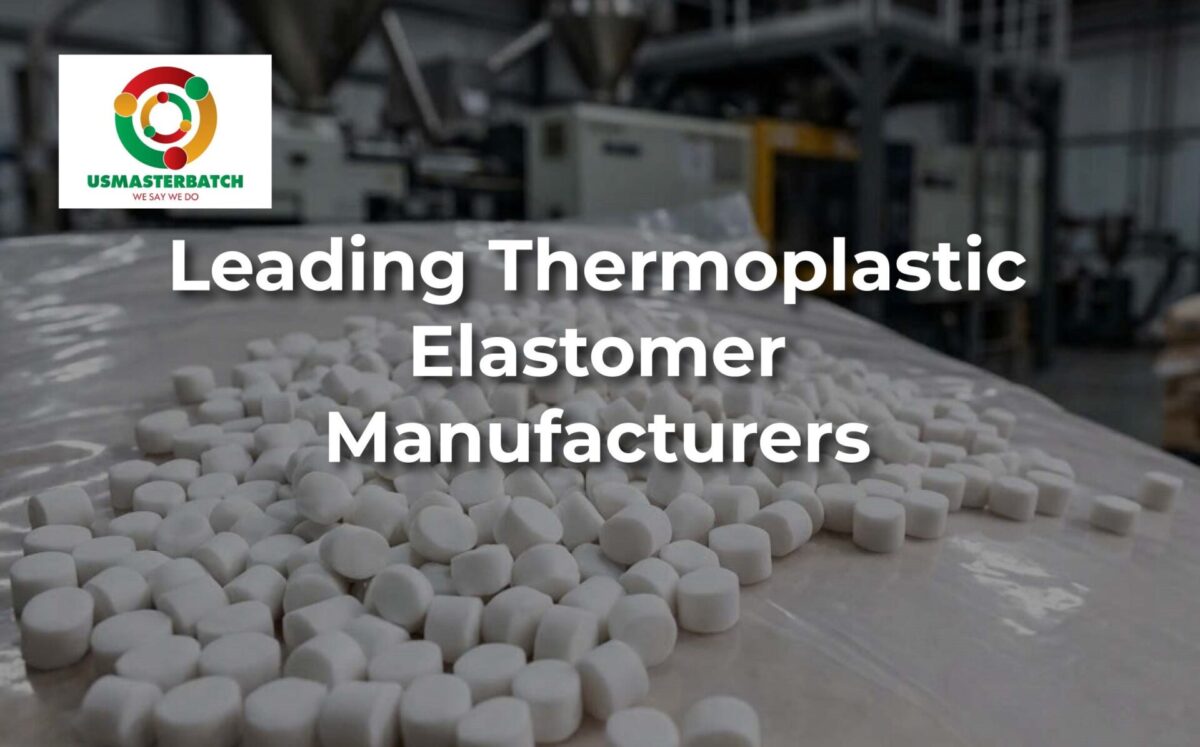
Leading Thermoplastic Elastomer Manufacturers
[US Masterbatch] Today, TPE materials are widely used in automotive components, medical devices, consumer goods, electronics, construction, and industrial applications. As demand for lightweight, sustainable, and high-performance materials increases, leading thermoplastic elastomer manufacturers continue to innovate and expand globally.
This article explores:
- What thermoplastic elastomers are
- Key types of TPE materials
- Top global TPE manufacturers
- Market trends shaping the industry
- How to choose the right TPE supplier
1. What Are Thermoplastic Elastomers (TPEs)?

(Illustrative purposes only)
Thermoplastic Elastomers are polymer materials that exhibit both thermoplastic and elastomeric properties. Unlike conventional rubber, TPEs can be melted, processed, and reprocessed multiple times without significant degradation.
Key Characteristics of TPE:
- Rubber-like flexibility
- Recyclable and reprocessable
- Lightweight
- Good impact resistance
- Excellent design flexibility
- Compatible with injection molding and extrusion
TPE materials eliminate the need for vulcanization, reducing processing time and manufacturing costs.
2. Main Types of Thermoplastic Elastomers
The TPE market includes several material families:
🔹 Styrenic Block Copolymers (SBC / TPS)
Used in footwear, adhesives, consumer goods.
🔹 Thermoplastic Polyolefins (TPO)
Common in automotive interiors and exterior parts.
🔹 Thermoplastic Polyurethanes (TPU)
High abrasion resistance, used in footwear, cables, industrial components.
🔹 Thermoplastic Vulcanizates (TPV)
Rubber-like performance for automotive seals and gaskets.
🔹 Copolyester Elastomers (COPE)
Used in industrial and high-temperature applications.
Each category serves specific industries depending on flexibility, durability, and heat resistance requirements.
3. Leading Thermoplastic Elastomer Manufacturers Worldwide
Below are some of the top global producers shaping the TPE market.
a. Kraton Corporation
Kraton is a global leader in styrenic block copolymers (SBC) and performance elastomers.
Strengths:
- Advanced polymer technology
- Strong portfolio in adhesives, paving, and personal care
- Global production footprint
- Sustainable bio-based innovation
Kraton is particularly strong in SBC-based TPE solutions.
b. Dow
Dow is one of the world’s largest chemical companies and a major supplier of TPO and elastomer materials.
Competitive Advantages:
- Integrated polyolefin production
- Strong R&D capability
- Automotive and packaging leadership
- Global technical support network
Dow’s ENGAGE™ polyolefin elastomers are widely used in automotive and industrial applications.
c. BASF
BASF produces thermoplastic polyurethanes (TPU) under its Elastollan® brand.
Key Highlights:
- High-performance TPU solutions
- Strong presence in footwear and industrial markets
- Advanced material research
- Sustainability-focused production
BASF’s TPU materials are known for durability and abrasion resistance.
d. Covestro
Covestro is a global leader in TPU under the Desmopan® brand.
Strengths:
- Premium TPU grades
- Automotive and electronics focus
- Bio-based TPU development
- High mechanical strength and transparency options
Covestro is widely recognized in performance TPU markets.
e. ExxonMobil
ExxonMobil produces Vistamaxx™ performance polymers, widely used in TPE blends.
Advantages:
- Strong polyolefin expertise
- Large-scale global supply chain
- Automotive and flexible packaging solutions
f. Arkema
Arkema produces Pebax® elastomers (polyether block amide – PEBA).
Highlights:
- Lightweight high-performance elastomers
- Sports and medical applications
- Excellent flexibility at low temperatures
- Bio-based material innovation
Pebax® is especially popular in high-performance athletic footwear.
g. Teknor Apex
Teknor Apex is a leading compounder of TPE and PVC compounds.
Strengths:
- Custom formulation capability
- Medical and consumer goods focus
- Flexible production scale
- Strong application engineering support
h. Avient
Avient provides specialty elastomer compounds and custom TPE formulations.
Advantages:
- Customized material solutions
- Strong design support
- Sustainable material platforms
- Global presence
4. Global TPE Market Trends
✅ 1. Sustainability & Recyclability
TPEs are increasingly replacing thermoset rubber due to:
- Recyclability
- Lower carbon footprint
- Reduced manufacturing energy consumption
Bio-based and recycled-content TPEs are growing rapidly.
✅ 2. Lightweight Automotive Applications
Automotive manufacturers are using TPEs to:
- Reduce vehicle weight
- Improve fuel efficiency
- Replace metal and traditional rubber parts
TPVs and TPOs are widely used in automotive sealing systems.
✅ 3. Medical-Grade TPE Growth
Medical TPE demand is increasing due to:
- Latex-free alternatives
- Sterilization resistance
- Regulatory compliance
Medical tubing, syringe components, and device grips commonly use TPE materials.
✅ 4. Consumer Product Innovation
TPEs are widely used in:
- Soft-touch grips
- Wearables
- Electronics
- Footwear midsoles
Design flexibility and aesthetic appeal drive demand.
5. Benefits of Working with Leading Thermoplastic Elastomer Manufacturers
Partnering with established global TPE producers provides:
🔹 Material consistency
Ensures stable mechanical and thermal properties.
🔹 Technical expertise
Application engineering and processing optimization support.
🔹 Regulatory compliance
Medical and food-grade certifications.
🔹 Supply chain stability
Global logistics and production footprint.
6. How to Choose the Right Thermoplastic Elastomer Manufacturers
When selecting a TPE supplier, consider:
a. Application Fit
Does the supplier provide grades specific to your industry?
b. Customization Capability
Can they modify hardness (Shore A/D), color, or mechanical properties?
c. Processing Compatibility
Injection molding, extrusion, overmolding compatibility.
d. Certifications
ISO, REACH, RoHS, FDA, or medical compliance as required.
e. Technical Support
On-site assistance and development collaboration.
7. Future Outlook of the Thermoplastic Elastomer Industry

(Illustrative purposes only)
The global TPE market is expected to grow steadily due to:
- Rising demand in Asia-Pacific
- Electric vehicle expansion
- Sustainable material transition
- Medical device innovation
Advanced compounding, recycled TPE blends, and bio-based elastomers will shape the next phase of industry development.
Manufacturers investing in R&D and sustainability will dominate future growth.
Conclusion
Thermoplastic Elastomers are redefining material performance across industries. With flexibility, recyclability, and processing advantages, TPEs offer a modern alternative to traditional rubber.
Leading thermoplastic elastomer manufacturers such as Kraton, Dow, BASF, Covestro, ExxonMobil, Arkema, Teknor Apex, and Avient continue to push innovation boundaries through advanced formulations and sustainable technologies.
For companies seeking competitive material solutions, selecting the right TPE partner is essential for ensuring product quality, regulatory compliance, cost efficiency, and long-term growth.