BOPP Tape – Structure, Classification & Polymer Optimization
1. Theoretical Framework: What is Biaxially Oriented Polypropylene?
BOPP Tape is manufactured from Biaxially Oriented Polypropylene (BOPP), a film material produced through a specialized stretching process. The term BOPP refers to the physical transformation of Polypropylene (PP) through a specialized stretching process. Polypropylene is a thermoplastic addition polymer made from the combination of propylene monomers. When we discuss “Biaxial Orientation”, we are referring to a mechanical process where the film is stretched in two perpendicular directions:
- Machine Direction (MD): The direction in which the film travels through the machine.
- Transverse Direction (TD): The direction perpendicular to the machine flow.
The Molecular Transformation
During the stretching process, the semi-crystalline molecular structure of the PP resin is reorganized. This realignment significantly increases the film’s tensile strength, enhances its barrier properties against water vapor, and drastically improves optical clarity. For high-speed packaging lines, this orientation is vital because it prevents the tape from elongating or snapping under the high tension of automated carton sealers.
2. Technical Architecture of BOPP Tape
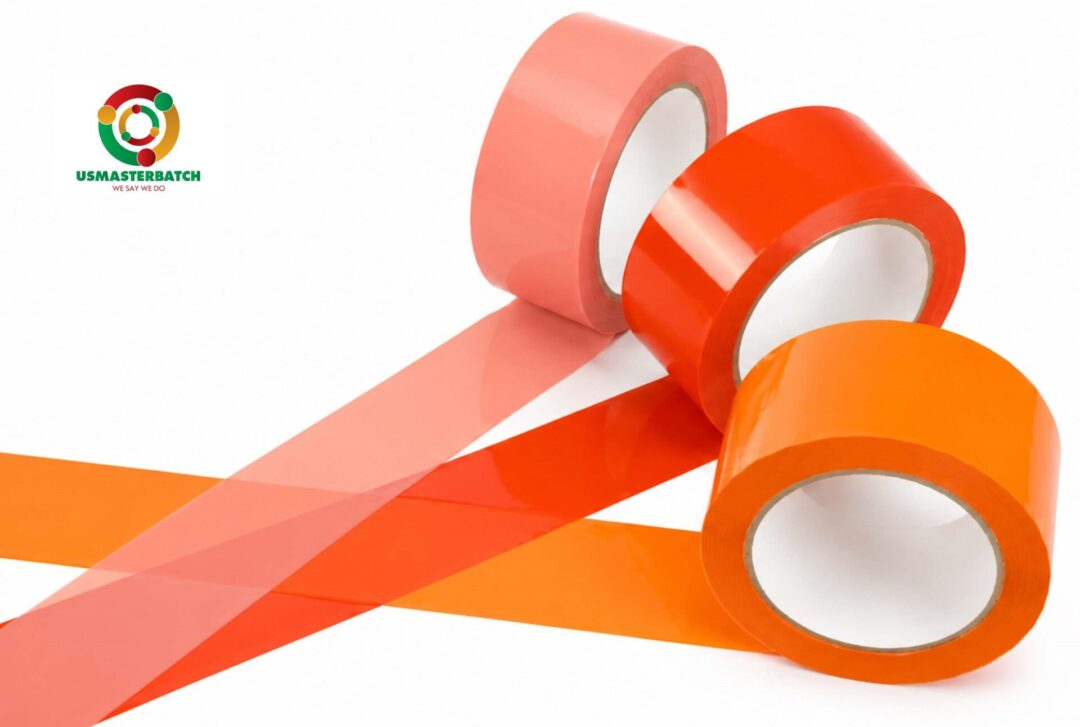
(Illustrative purpose only)
A roll of BOPP tape is not a monolithic structure but a sophisticated multi-layered composite. To achieve the “We Say, We Do” quality standard that US Masterbatch advocates, each layer must be engineered with precision.
2.1 The Film Base (The Carrier)
The carrier typically accounts for the majority of the tape’s thickness, usually ranging from 23 to 35 microns. This layer provides the mechanical “bones” of the tape. Its performance is dictated by the quality of the virgin PP resin and the inclusion of Additives Masterbatch to ensure thermal stability.
2.2 The Release Coating (The Top Layer)
To ensure the tape can be unwound from the roll without tearing the film or delaminating the adhesive, a microscopic layer of release agent is applied to the non-adhesive side. This allows for a consistent, low-noise unwind experience.
2.3 The Primer and Corona Treatment
PP is naturally non-polar, meaning adhesives do not easily bond to its surface. To solve this, manufacturers use Corona Discharge Treatment to increase the surface energy of the film. In some high-end applications, a chemical primer is also used to ensure that the adhesive stays on the carrier and does not transfer to the box.
2.4 The Adhesive System
Most industrial BOPP tapes use Acrylic Adhesive (water-based or solvent-based). Acrylics are preferred for their excellent “aging” characteristics, meaning they do not turn yellow or lose tackiness when exposed to UV light or long-term storage.
3. The Critical Role of Masterbatches in BOPP Production
At US Masterbatch, our 20 years of expertise and a production capacity of 230,000 MT per year allow us to provide the specific chemical “building blocks” that make BOPP tape functional.
3.1 Antiblock Masterbatch (UATB series)
Without an effective antiblock agent, the high-gloss surfaces of BOPP film would fuse together due to van der Waals forces, making the roll impossible to unwind. Our Antiblock Masterbatch creates a microscopic surface roughness that maintains a thin layer of air between the film layers, ensuring smooth processing.
3.2 Optical Brightener Masterbatch (UMOB series)
For the “Crystal Clear” tape market, aesthetics are paramount. Our Optical Brightener Masterbatch absorbs UV light and re-emits it in the blue spectrum, masking any natural yellowness of the polymer and providing a premium, brilliant finish.
3.3 Color Masterbatch for Branding
While clear tape is the standard, many industries require colored tapes for identification or security. US Masterbatch provides high-pigment-load Color Masterbatches (Tan, Yellow, Red, Blue) that offer high lightfastness and heat resistance, ensuring the tape color remains vibrant even after months in a shipping container.
3.4 The Strategic Use of Filler Masterbatch
While the core of BOPP film is usually virgin resin, specialized Filler Masterbatches (CaCO3 based) can be used in the production of the tape’s paper or plastic cores, and in certain matte-finish tapes to improve stiffness and provide cost-optimization.
4. Comprehensive Classification of BOPP Tapes
Understanding the categories of BOPP tape is essential for B2B procurement and application matching.
4.1 Classification by Appearance
- Transparent/Clear: The most common variety, used when packaging aesthetics must be maintained.
- Tan/Brown: Created using Color Masterbatch to match the color of corrugated kraft boxes.
- Custom Printed: Used for brand recognition and as an anti-tamper evidence measure.
4.2 Classification by Adhesive Grade
- Standard Grade: Suitable for lightweight boxes and indoor storage.
- Heavy Duty Grade: Features a thicker film and a higher adhesive coat weight for shipping heavy machinery or overstuffed cartons.
- Low-Noise Grade: Specifically engineered for open-plan warehouses to reduce the high-pitched “screech” during high-speed application.
5. Industrial Applications and Market Dynamics of BOPP Tape
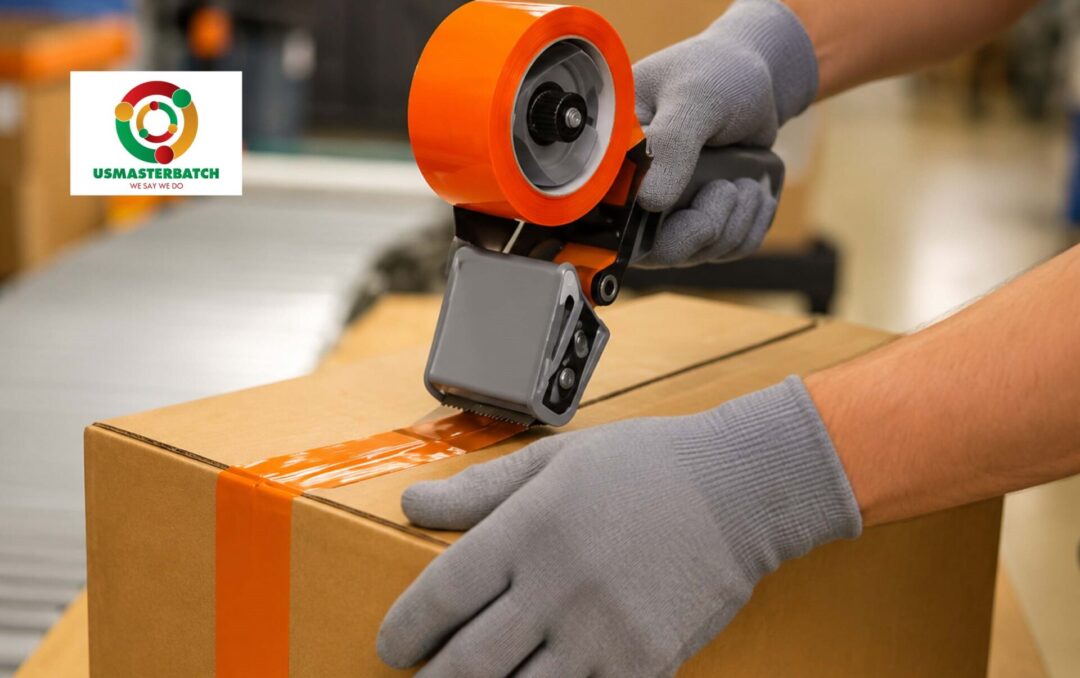
(Illustrative purpose only)
The versatility of BOPP tape, supported by the advanced manufacturing capabilities of companies like US Masterbatch, has made it indispensable.
5.1 Logistics and Warehousing
In the age of E-commerce, the “last mile” delivery depends on the seal integrity of the carton. BOPP tape provides the shear strength necessary to withstand the vibrations of truck and air transport.
5.2 Industrial Bundling
Beyond sealing boxes, BOPP tape is used to bundle pipes, plastic profiles, and lumber. The high tensile strength (strengthened by the biaxial orientation) ensures that these heavy items stay secured during transit.
5.3 Specialized Environmental Sealing
With the help of UV Stabilizer Masterbatches, BOPP tapes can be engineered for outdoor use, preventing the polymer from becoming brittle and failing under direct sunlight.
6. Quality Control and Technical Standards of BOPP Tape
At US Masterbatch, quality is not an accident; it is the result of rigorous testing in our well-equipped R&D centers. For BOPP tape to be effective, it must be tested for:
- Peel Adhesion: The force required to remove the tape from a surface.
- Tack (Initial Grab): The ability of the adhesive to form a bond immediately upon contact.
- Shear Strength: The ability of the tape to resist sliding under a constant load (critical for preventing boxes from popping open).
- Tensile Strength and Elongation: Measured using our Tensile Strength & Elongation Tester to ensure the film can handle industrial tensions.
7. Sustainability and Future Trends
The industry is shifting toward thinner films with higher performance to reduce plastic waste. Furthermore, the development of Bio-Degradable Filler Masterbatches is a key focus for our R&D team at US Masterbatch to support a greener circular economy. By optimizing the resin-to-filler ratio, manufacturers can reduce their carbon footprint while maintaining the mechanical properties of their tape products.
Conclusion: The US Masterbatch Advantage
The production of high-quality BOPP tape is a synergy between advanced mechanical engineering and sophisticated polymer chemistry. As a leader in the masterbatch industry, US Masterbatch JSC remains committed to our slogan: “We Say, We Do”.
By providing a wide range of Filler Masterbatches, Color Masterbatches, and Functional Additives, we empower our partners to produce BOPP tapes that are not only cost-effective but also world-class in performance. Our three state-of-the-art factories in Vietnam, with over 20 production lines, stand ready to fulfill the demands of the global packaging industry.
For more information on how our masterbatch solutions can optimize your BOPP production line, please visit our website or contact our technical sales team directly.