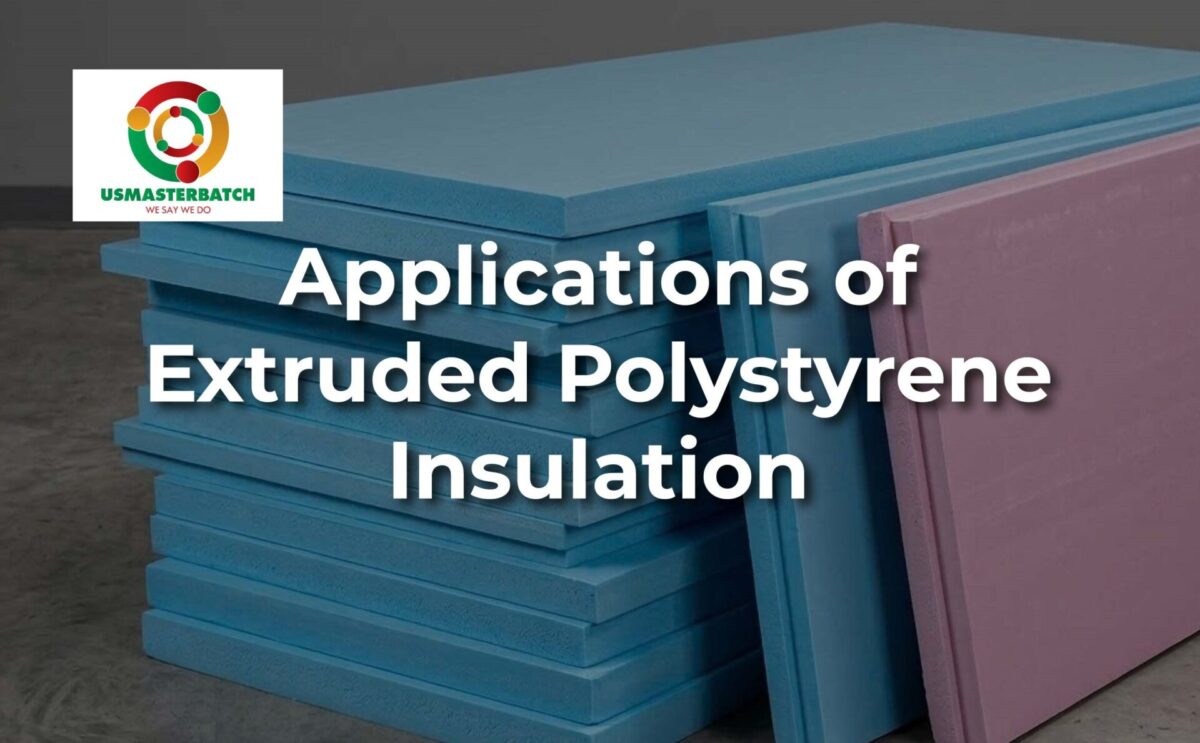
Applications of Extruded Polystyrene Insulation
[US Masterbatch] Extruded Polystyrene Insulation (XPS Insulation) is a rigid foam insulation material widely used in modern construction and infrastructure projects. It is manufactured through an extrusion process in which polystyrene resin is melted and mixed with additives and blowing agents to form a continuous foam structure with closed cells.
Thanks to its closed-cell structure, XPS offers excellent thermal insulation performance, low water absorption, high compressive strength, and long-term durability. These properties make XPS one of the most reliable insulation materials for buildings exposed to varying environmental conditions.
Compared with other insulation materials, XPS maintains stable thermal performance even in humid environments. It is also resistant to moisture, mold, and freeze-thaw cycles, which makes it particularly suitable for applications where durability and energy efficiency are critical.
Due to these advantages, XPS insulation has become a popular solution across many sectors including residential construction, commercial buildings, infrastructure, and cold storage facilities.
Key Applications of Extruded Polystyrene Insulation

(Illustrative purposes only)
Roof Insulation
One of the most common applications of XPS insulation is roof insulation. Roofs are constantly exposed to sunlight, temperature fluctuations, and weather conditions, which can significantly affect indoor comfort and building energy consumption.
XPS boards are frequently used in flat roofs, inverted roofs, and concrete roof systems. In inverted roof systems, the insulation layer is placed above the waterproof membrane, protecting it from temperature changes and mechanical damage.
The high compressive strength of XPS allows it to withstand loads from foot traffic, equipment, and protective layers. At the same time, its low water absorption ensures that the insulation maintains its performance even when exposed to moisture.
Using XPS insulation in roof systems helps reduce heat gain during hot seasons and heat loss during colder periods. As a result, buildings require less energy for air conditioning and heating, leading to lower operational costs and improved energy efficiency.
Wall Insulation
Another important application of XPS insulation is wall insulation. Properly insulated walls play a crucial role in maintaining stable indoor temperatures and improving overall building performance.
XPS boards are widely used in both external wall insulation systems and internal insulation systems. In external wall insulation, XPS panels are installed on the outside of the building structure, creating a continuous thermal barrier that reduces heat transfer through the walls.
In addition, XPS insulation can be used in sandwich wall panels, which are commonly found in industrial buildings, warehouses, and prefabricated structures. The insulation layer helps improve thermal resistance while maintaining structural strength.
By reducing thermal bridging and heat transfer, XPS insulation enhances indoor comfort and contributes to significant energy savings over the life of the building.
Floor and Foundation Insulation
Extruded Polystyrene insulation is particularly well suited for floor and foundation applications due to its high compressive strength and moisture resistance.
When installed under concrete slabs or foundation systems, XPS provides a strong insulation layer that can support heavy loads without deformation. This makes it suitable for residential buildings, commercial spaces, industrial floors, and warehouse facilities.
Another advantage of XPS in floor applications is its extremely low water absorption. Unlike some other insulation materials, XPS maintains its thermal performance even when exposed to moisture from soil or groundwater.
In basement floors and foundation walls, Extruded Polystyrene insulation helps prevent heat loss through the ground and protects the building structure from temperature fluctuations.
These benefits make XPS an effective solution for improving building durability, thermal performance, and energy efficiency.
Cold Storage and Refrigeration Facilities
Cold storage facilities require insulation materials with very high thermal resistance and long-term reliability. XPS insulation meets these requirements and is therefore widely used in cold chain infrastructure.
Applications include:
- Cold storage warehouses
- Refrigeration rooms
- Food processing facilities
- Refrigerated transportation containers
In these environments, maintaining stable temperatures is critical for preserving food, pharmaceuticals, and other temperature-sensitive products.
The closed-cell structure of XPS prevents moisture penetration and minimizes heat transfer, helping maintain consistent internal temperatures. This improves refrigeration efficiency and reduces energy consumption in cold storage systems.
Additionally, the dimensional stability of XPS ensures that insulation performance remains consistent over long periods, even under demanding operating conditions.
Infrastructure and Civil Engineering
Beyond building construction, Extruded Polystyrene insulation is also used in infrastructure and civil engineering projects.
In cold climate regions, XPS can be installed under roads, railways, and airport runways to prevent frost heave. Frost heave occurs when moisture in the soil freezes and expands, which can damage pavement and structural foundations.
By placing Extruded Polystyrene insulation layers beneath the surface, engineers can reduce temperature variations in the soil and prevent freezing. This helps maintain the structural integrity of transportation infrastructure.
XPS is also used in bridge construction, retaining walls, and underground structures where thermal protection and moisture resistance are required.
Its combination of strength, durability, and insulation performance makes XPS a valuable material in infrastructure design.
Agricultural and Landscaping Applications
In addition to construction and infrastructure, Extruded Polystyrene insulation also has applications in agriculture and landscaping.
For example, XPS boards are used in greenhouse construction to improve thermal control. By reducing heat loss, the insulation helps maintain optimal temperatures for plant growth and improves energy efficiency in greenhouse operations.
XPS can also be used in green roof systems and landscaping projects where lightweight insulation with moisture resistance is required.
In these applications, XPS contributes to better temperature regulation and long-term structural stability.
Advantages of Using Extruded Polystyrene Insulation

(Illustrative purposes only)
The widespread use of Extruded Polystyrene insulation across multiple industries is due to its unique combination of performance characteristics.
Key advantages include:
- Excellent thermal insulation performance
- Closed-cell structure with very low water absorption
- High compressive strength
- Long service life and durability
- Resistance to mold and moisture
- Stable performance in harsh environmental conditions
These properties allow Extruded Polystyrene insulation to maintain consistent performance for many years, making it a cost-effective insulation solution for both buildings and infrastructure.
Conclusion
Extruded Polystyrene insulation is one of the most versatile and effective insulation materials available today. Its unique combination of thermal efficiency, moisture resistance, and mechanical strength makes it suitable for a wide range of applications.
From roofs and walls to floors, foundations, and cold storage facilities, XPS plays an important role in improving building performance and reducing energy consumption. It also supports infrastructure development by protecting structures from temperature fluctuations and environmental stress.
As energy efficiency and sustainable construction become increasingly important worldwide, the demand for high-performance insulation materials such as XPS is expected to continue growing.
With its proven reliability and wide range of applications, Extruded Polystyrene insulation remains a key solution for modern construction and engineering projects.