What are Phenolic Antioxidants for Polymers? Benefits and Applications
1. What are Phenolic Antioxidants for Polymers?
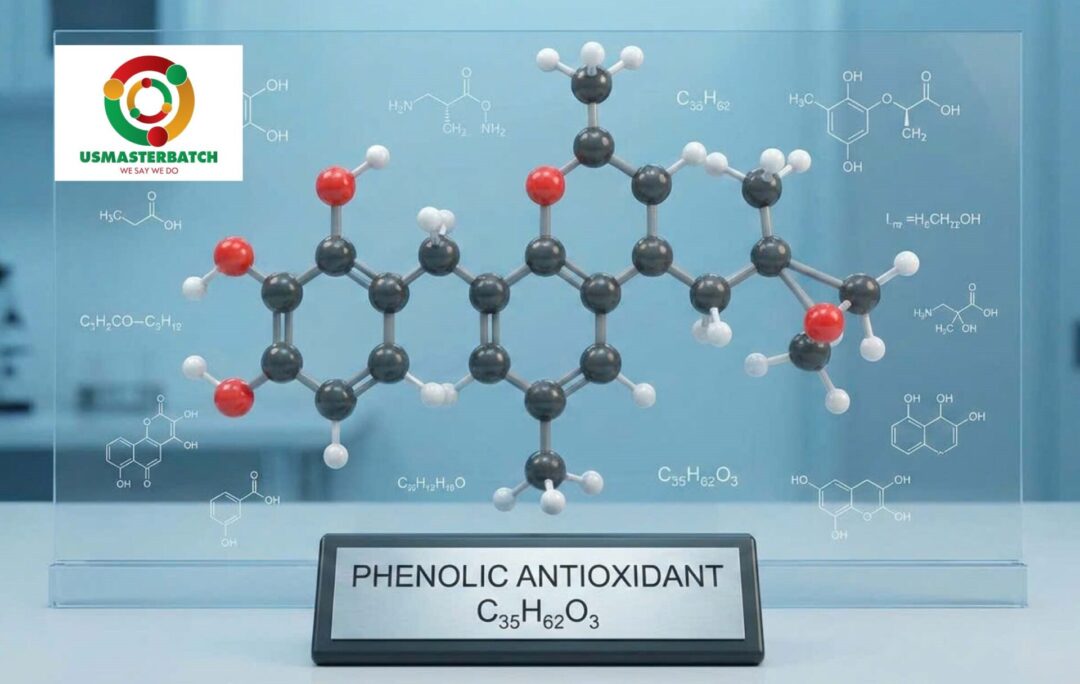
Phenolic antioxidants for Polymers, often referred to as Primary Antioxidants, are chemical compounds used to prevent the oxidative degradation of polymers. They belong to the class of “hindered phenols”.
Their primary job is to act as “Radical Scavengers”. When polymers are exposed to heat or UV light, they form unstable free radicals. Phenolic antioxidants “sacrifice” themselves by reacting with these radicals, neutralizing them before they can break the polymer chains.
2. Why Does Your Polymer Need Protection?
Polymer degradation occurs in two main stages:
- Processing Degradation: High temperatures during extrusion or injection molding (often exceeding 200°C) cause immediate thermal oxidation.
- Long-Term Thermal Aging (LTTA): Even after the product is made, environmental heat and oxygen continue to attack the plastic over months or years.
Consequences of skipping antioxidants:
- Loss of Mechanical Properties: Reduced tensile strength and impact resistance.
- Visual Defects: Yellowing (discoloration) and loss of gloss.
- Surface Cracking: Often seen in outdoor furniture or pipes.
- Melt Flow Changes: The MFR (Melt Flow Rate) becomes inconsistent, making production difficult.
3. How Phenolic Antioxidants for Polymers Work: The Chemistry Simplified
To understand their value, we must look at the Autoxidation Cycle.
When a polymer (RH) is stressed, it loses a hydrogen atom to form a free radical (R). This radical reacts with oxygen to form a peroxy radical (ROO), which then attacks another polymer chain, creating a chain reaction of destruction.
Phenolic Antioxidants (ArOH) intervene by donating a hydrogen atom to the peroxy radical:
ROO + ArOH => ROOH + ArO
The resulting antioxidant radical (ArO) is stable and does not attack the polymer. This effectively stops the chain reaction in its tracks.
4. Most Common Types of Phenolic Antioxidants for Polymers in the Industry
A. Antioxidant 1010 (High Molecular Weight)
- Characteristics: Non-staining, low volatility, and excellent compatibility with most polymers.
- Best for: Polyolefins (PE, PP), engineering plastics, and adhesives.
- Benefit: Provides exceptional long-term thermal stability.
B. Antioxidant 1076 (Standard Efficiency)
- Characteristics: Odorless and highly resistant to light.
- Best for: Polyethylene, Polystyrene, and PVC.
- Benefit: Excellent for food-contact applications as it often meets FDA Approval standards.
5. The Synergy: Why We Pair Primary and Secondary Antioxidants
In professional masterbatch formulation, we rarely use phenolic antioxidants alone. We typically create a Synergistic Blend.
- Primary (Phenolic): Scavenges radicals (Protects the finished product).
- Secondary (Phosphites/Thioesters): Decomposes hydroperoxides (Protects the polymer during the high-heat extrusion process).
By using a blend (e.g., a 1:2 ratio of Phenolic to Phosphite), we ensure the plastic stays clear and strong from the moment it leaves the die head until the end of its lifecycle.
6. Applications in the Masterbatch Industry
Filler Masterbatch (CaCO3) – US Masterbatch
Even though filler masterbatch is 70-80% calcium carbonate, the polymer carrier (PE or PP) still needs protection. Adding antioxidants ensures that the filler disperses well and doesn’t cause “charring” or black spots in the final film.
Color Masterbatch – US Masterbatch
High-quality pigments can sometimes catalyze oxidation. We use phenolic antioxidants to preserve the color consistency and prevent the “fading” effect often seen in low-quality plastics.
Engineering Compounds – US Masterbatch
For automotive or electronic parts that face high operating temperatures, we increase the loading of hindered phenols to ensure the parts meet ISO 9001:2015 durability standards.
7. Selecting the Right Antioxidant: Factors to Consider
If you are a manufacturer, consider these four factors when choosing your stabilizer package:
- Regulatory Compliance: Does your product need to be FDA, REACH, or RoHS compliant? Most high-grade phenolic antioxidants are approved for food contact.
- Processing Temperature: If you work with high-heat resins like PA6 or PET, you need a high-molecular-weight phenol that won’t evaporate (low volatility).
- Discoloration (Gas Fading): Some phenols can react with NOx gases in warehouses, causing “pinking” or yellowing. Choosing the right “hindered” structure is vital.
- Compatibility: The antioxidant must stay “inside” the plastic. If it migrates to the surface (blooming), it can ruin printing or sealing.