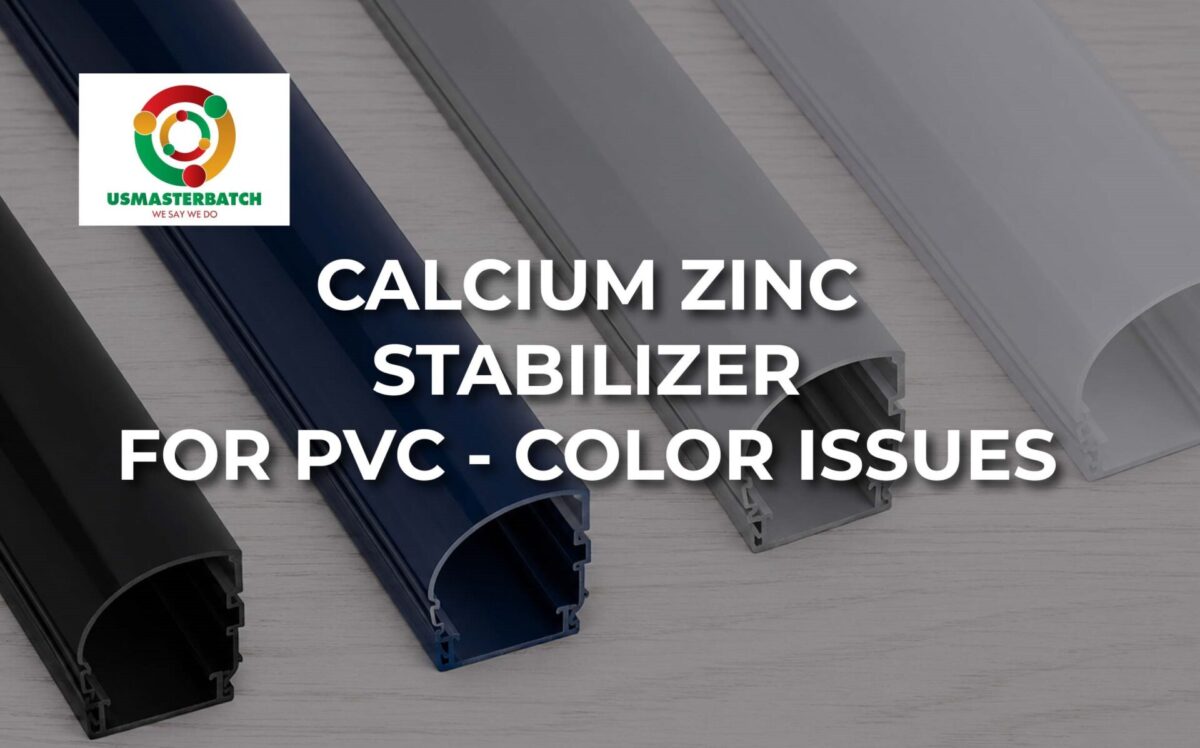
Calcium Zinc Stabilizer for PVC Window Profiles
Calcium Zinc stabilizer for PVC is an important additive system that technical managers in the pipe and profile industry need to consider. Selecting the right stabilization system is not only a matter of environmental compliance but also a key decision affecting production efficiency and product lifespan.
Real challenges faced by window profile manufacturers
Despite using high-quality resin and modern extrusion lines, many window profile manufacturers still face recurring issues that slow down production and affect final product quality. These problems are common across many factories but are rarely discussed in detail.
- Unstable extrusion during long production runs
Output may start stable but gradually fluctuate due to thermal imbalance, especially when recycled material is introduced. This forces operators to reduce line speed or stop the machine. - Surface defects appearing after cooling
Defects such as flow lines, haze patches, or uneven gloss often appear after calibration rather than during compounding. These issues affect lamination processes and customer acceptance. - Premature yellowing in white profiles
Profiles may pass initial inspection but lose brightness after storage or outdoor exposure, leading to complaints from fabricators and end users. - Weak weld strength in window frames
Profiles may crack or break during welding or installation, even when processing parameters are properly controlled.
The root cause lies in how PVC stabilization works. While lead-based stabilizers have been widely used in the past, switching to Calcium Zinc stabilizer for PVC helps manufacturers comply more easily with RoHS, REACH, and NSF standards, opening access to regulated markets such as the United States and Canada. Under real production conditions, Calcium Zinc stabilizer for PVC window profiles directly influences processing stability and long-term window performance.
What truly differentiates Calcium Zinc stabilizer for PVC window profiles
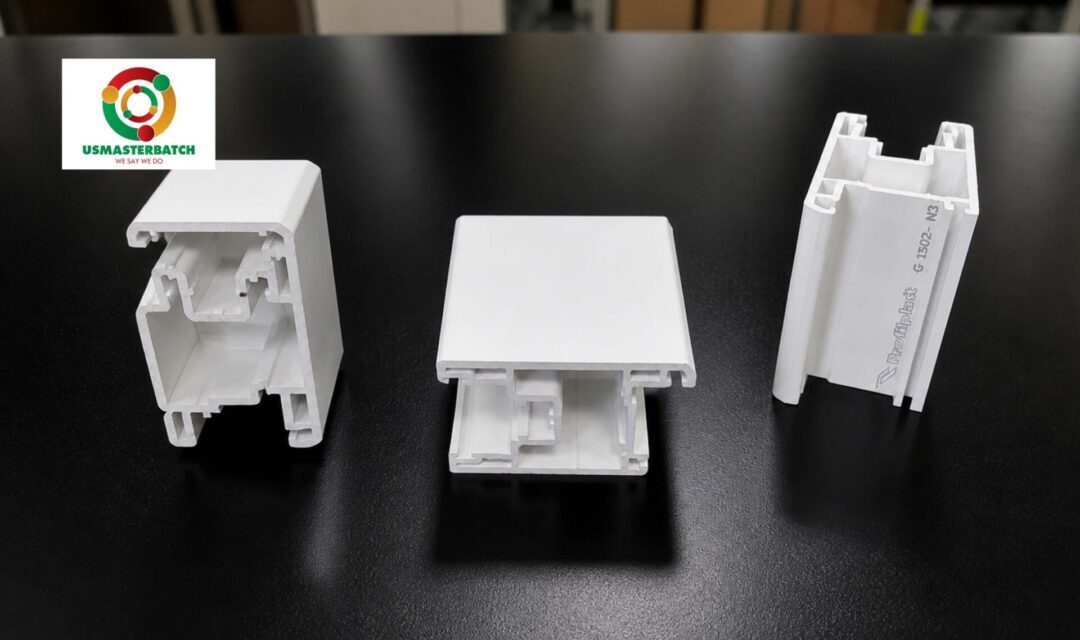
(Illustrative purpose only)
- It functions as a system, not a single component
Calcium Zinc stabilizer for PVC combines metal soaps and organic components that activate at different stages of extrusion, providing controlled protection instead of allowing sudden degradation. - Better control during long continuous runs
Window profiles are exposed to higher thermal load due to thicker walls and longer material residence time. A properly balanced CaZn stabilization system helps maintain stable torque and melt flow without frequent operator adjustments. - Reduced risk of sudden degradation
Compared to older stabilizer concepts, CaZn systems are designed to handle temperature fluctuations and recycled material more predictably. - Performance-driven, not just compliance-driven
When properly formulated, Calcium Zinc stabilizer for PVC helps improve surface quality, weld strength, and processing consistency, addressing daily operational challenges in window profile production.
Why Calcium Zinc stabilizer formulation quality matters for window profiles
For window profiles, appearance is not only an aesthetic factor but also a quality benchmark. Even minor surface defects or loss of whiteness can lead to product rejection, regardless of mechanical performance.
How stabilizer formulation affects surface quality:
- Uniform melt flow at the die exit
An unbalanced stabilization system can disrupt melt lubrication, causing flow marks, drag lines, or rough surfaces after cooling. - Inconsistent initial whiteness
Poor stabilization can interact with pigments, especially TiO₂, reducing brightness from the first production batch. - Whiteness retention over time
Products that appear acceptable at shipment may gradually yellow due to ongoing thermal or oxidative degradation if stabilization is insufficient. - Improved lamination and hot stamping results
Smoother, chemically stable surfaces enhance adhesive bonding and reduce defects in downstream processes.
Surface issues are often attributed to tooling or lubrication. In reality, stabilizer quality plays a critical role at the molecular level long before the product reaches the customer.
How optimized CaZn stabilizers support fabrication
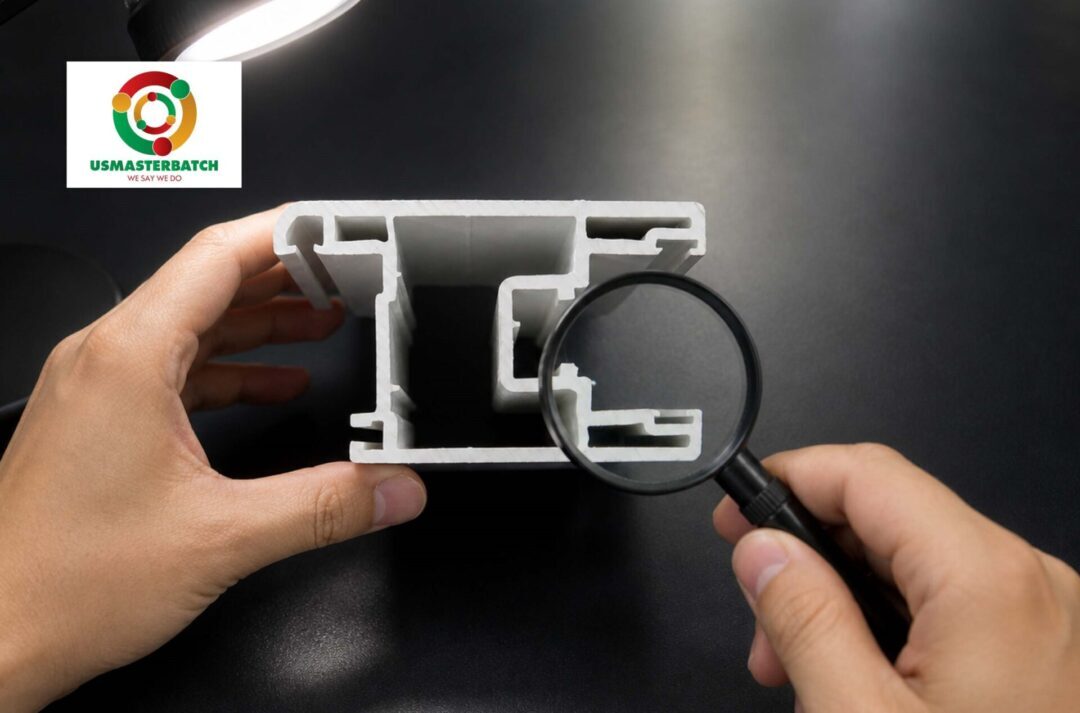
(Illustrative purpose only)
- Improved weld strength
A well-balanced CaZn system ensures sufficient molecular mobility at weld corners, enabling stronger bonding without cracking. - Reduced brittleness in thick sections
Thick-wall or multi-chamber profiles are prone to micro-cracking if thermal protection is uneven. Optimized CaZn systems help reduce this risk. - Stable processing performance
Heat generated during welding or machining can cause localized degradation in poorly stabilized profiles. A suitable CaZn stabilizer helps maintain consistent thermal resistance. - Support for post-extrusion operations
Drilling, cutting, and shaping become more predictable with chemically stable PVC, reducing scrap rates and improving productivity.
Selecting the right Calcium Zinc stabilizer for PVC window profiles
Selecting the right Calcium Zinc stabilizer for PVC is not simply a matter of choosing an available product. It requires matching the stabilization system to profile design, processing conditions, and long-term performance goals. Incorrect selection can lead to surface defects, extrusion instability, or reduced outdoor durability, even when all other parameters are optimized.
Key factors to consider:
- Profile thickness and design
Thicker or multi-chamber profiles retain more heat during extrusion. The stabilizer must provide consistent protection across varying wall sections. - Production speed and extrusion setup
High-speed, high-volume lines require stabilizers that maintain melt stability and torque consistency. Some CaZn systems perform better under specific processing conditions than others. - End-use environmental exposure
Applications exposed to high UV levels or hot climates require stabilizers that support yellowing resistance and long-term mechanical durability. - Recycled material content
Regrind introduces thermal history into the formulation. Calcium Zinc stabilizer for PVC with a suitable formulation can help control PVC system stability while maintaining consistent color and surface quality. - Compatibility with other additives
Lubricants, waxes, pigments, and UV absorbers all interact with stabilizers. Selecting a stabilization system compatible with the full formulation is critical. - Technical support and customization
Working with an experienced PVC stabilizer manufacturer ensures tailored solutions aligned with profile geometry and processing conditions, helping manufacturers avoid costly trial-and-error.
At US MASTERBATCH, Calcium Zinc stabilizer for PVC is not treated as a commodity product but as a performance solution that directly impacts window profile quality and lifespan.
The approach begins with a deep understanding of profile design, extrusion conditions, and end-use environment, enabling the recommendation of optimized CaZn systems for thermal stability, surface finish, weld strength, and long-term weathering performance. Unlike many competitors offering off-the-shelf solutions, the focus is on customized formulations supported by rigorous in-house R&D and modern production processes. This ensures consistent quality across batches while providing technical support during trials and scale-up.
By partnering with the right supplier, manufacturers can increase productivity, reduce defects, and deliver durable, high-quality PVC window profiles that perform reliably over time.